

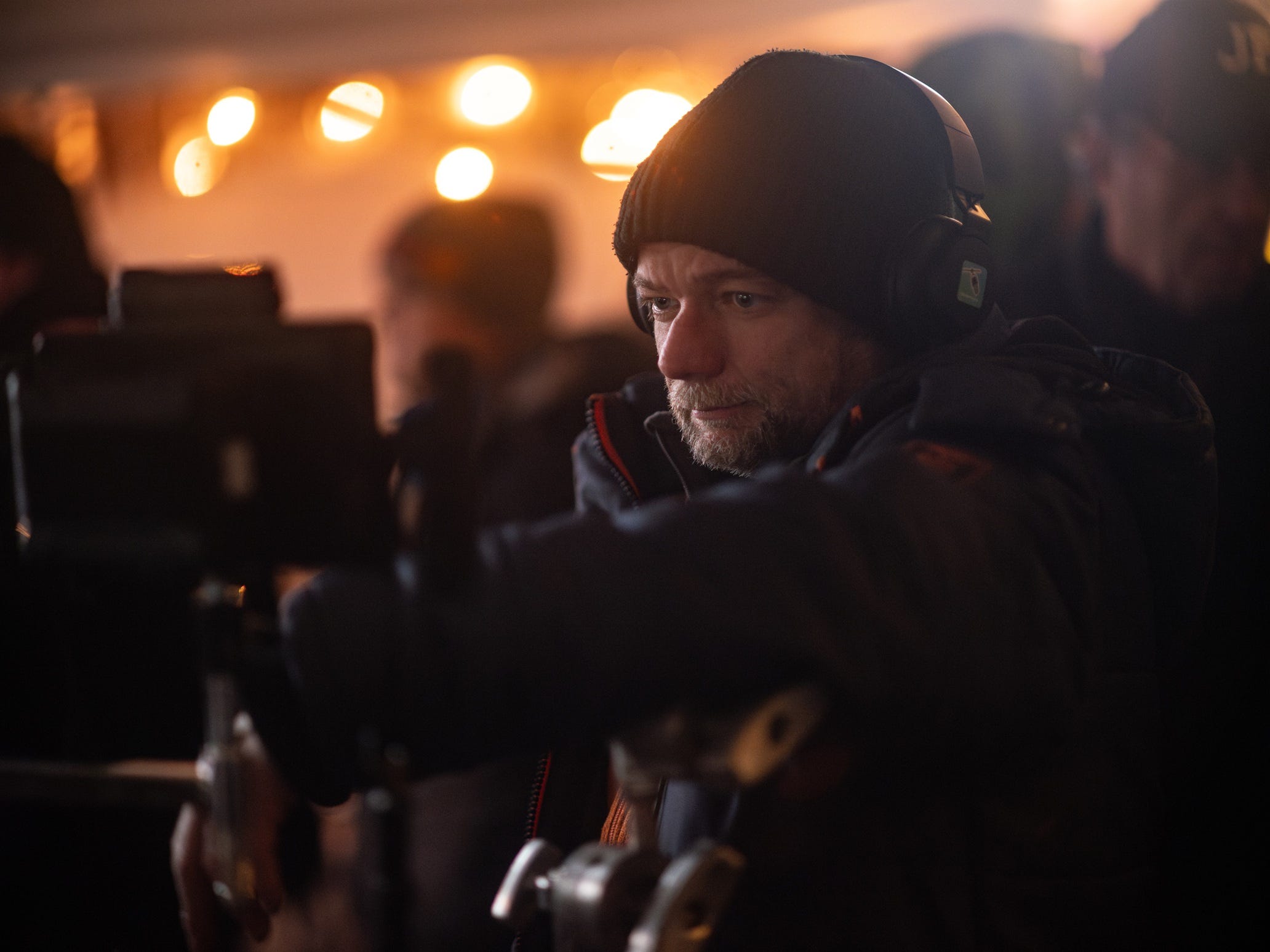
When André Øvredal broke through internationally with Trollhunter in 2010, it felt like the arrival of a filmmaker with a distinctly original sensibility. His mockumentary about trolls hiding in the Norwegian wilderness was playful, inventive, and deeply rooted in local folklore, yet somehow universally accessible.
It quickly became a cult favorite, and in the years since, Øvredal has done something remarkably few Norwegian directors have managed: he has built a sustained career in international genre filmmaking without losing his identity in the process.
That path has taken him through some very different corners of horror. The Autopsy of Jane Doe remains one of the most effective modern chamber horrors, a film that thrives on atmosphere, precision, and steadily mounting dread.
Scary Stories to Tell in the Dark proved he could bring that same sense of craft into a larger studio framework, while The Last Voyage of the Demeter transformed a familiar corner of Dracula mythology into a grim, sea-bound survival horror story. His latest film, Passenger, shifts gears again, taking horror out onto the open road and into the mythology of modern American nomad culture.
A quick spoiler warning: This conversation with André Øvredal goes deep into the hows and whys of horror, and includes a breakdown of one particular scene from Passenger.
On paper, the premise sounds familiar enough. A young couple traveling across the United States encounter a demonic entity that stalks those who stop along deserted roads at night. But talking to Øvredal, it quickly becomes clear that Passenger is less interesting as a simple monster movie than as a reflection of how he thinks about horror itself. The film opens up a broader conversation about suspense, audience manipulation, folklore, and the curious reality that what scares us most often has very little to do with monsters.
A haunted house on wheels
“I’d describe it as a haunted house movie on the road,” Øvredal says.
It’s one of those descriptions that instantly makes sense once you hear it. Traditional haunted house films are built around the gradual corruption of a supposedly safe environment. A house, a room, a domestic space that slowly becomes hostile. Claustrophobia is part of the architecture. Safety erodes one strange noise, one unexplained event, one narrowing possibility of escape at a time. Passenger takes that same structure and moves it into a fundamentally different setting.
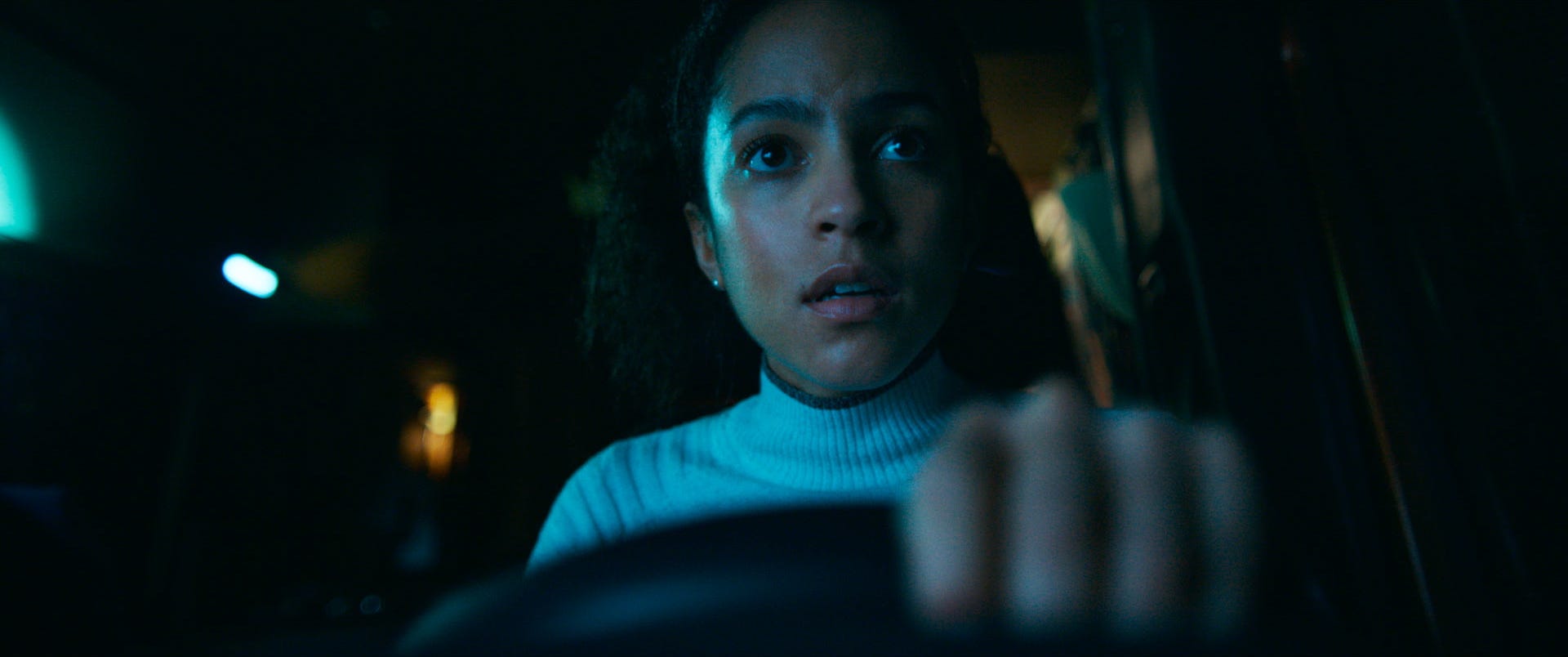
“I’ve read a lot of haunted house scripts, and obviously seen countless films,” he says. “It’s a subgenre, but I’d never seen one that takes place in motion, out on the road. That was what fascinated me.”
What makes the idea particularly effective is how naturally it fits within the mythology of the American road. Few countries have romanticized travel in quite the same way. The open highway has long represented freedom, reinvention, escape, and self-discovery in American storytelling. Road movies are practically a genre unto themselves, and in more recent years, the aesthetics of van life have turned a kind of curated nomadic existence into a social media fantasy. Endless skies, desert landscapes, coffee brewed outside the van at sunrise, the promise of movement without responsibility.
Øvredal understands that appeal.
“It’s a very familiar phenomenon, traveling like that,” he says. “For one thing, the distances are enormous, and there’s so much isolation out there in the desert, God knows where. Long stretches where you don’t see another person. But driving across America is a whole culture. Going coast to coast is almost a lifestyle. It’s something a lot of people dream about.”
He includes himself in that fantasy.
“I’ve never actually done it, but I’ve definitely wanted to. Maybe not all the way across the country, but parts of it.”
What horror does so well, of course, is take cultural fantasies and turn them inside out. Freedom becomes vulnerability. Space becomes exposure. The dream of endless movement becomes the nightmare of nowhere to hide. In Passenger, the open road isn’t liberating. It’s isolating. The vastness that might seem beautiful in another kind of film becomes threatening, precisely because there is no safety net.
The film explores that sense of unease by weaving in something older and stranger: the so-called hobo codes that appear throughout the story as warnings. These symbolic markings, historically associated with itinerant workers and drifters in America, were once used to communicate practical information to others moving through the same spaces. A place that offered food. A hostile homeowner. Work opportunities. Danger.
Øvredal was drawn to the idea that these old systems of communication could become part of a darker mythology.
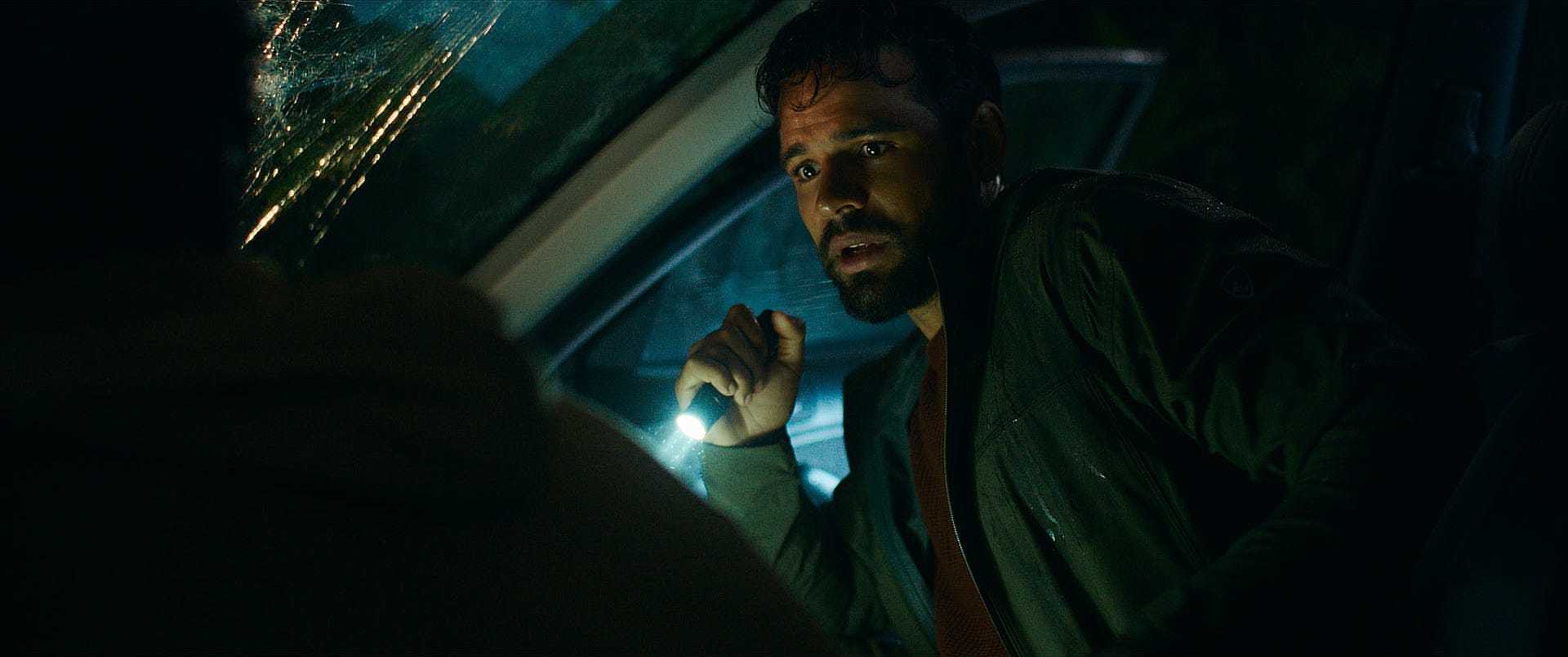
“These are old things,” he says. “Carving a symbol into a tree, a sign, whatever. It functioned as a kind of nomadic communication system for a hundred, maybe a hundred and fifty years, maybe even longer for all I know.”
It’s an inspired touch because it gives Passenger the feeling of inherited folklore. The suggestion that others have encountered this threat before, that warnings already exist if only you know how to read them, creates a sense that the evil in the film predates the story itself. Horror often benefits enormously from that feeling of age. The most unsettling monsters rarely feel new.
A new threat
And yet, interestingly, the Passenger itself is not based on any specific mythology.
“It’s a character we created for the film,” Øvredal explains. “It’s not based on a specific American urban myth or any other mythology. There are myths that sort of float around culturally, but we didn’t base him on a particular folkloric figure.”
That may surprise some viewers, because the creature feels uncannily like something that should already exist in American folklore, the sort of story truck drivers might pass along in roadside diners. But the character went through a long evolution before reaching the screen.
“He went through a lot of versions before we landed on the final one. Early on, he was more of a shadow figure. Much less tangible.”
That shift toward something more physical was deliberate, and it leads Øvredal into one of the more revealing observations of the conversation.
“We were very focused, Walter and Gary, the producers, myself, the whole team, on making him a physical manifestation. Something with humanity in the design, rather than just another shadow entity. We miss that a little in horror.”
It’s a point worth considering. Contemporary horror has often leaned toward abstraction, favoring atmosphere, metaphor, and unseen forces over tangible monsters. Some of the genre’s best recent films have thrived in precisely that space. But horror history is also filled with iconic figures whose power comes from physical presence, characters who occupy space in a way that feels disturbingly real.
Freddy Krueger worked because he was more than an idea. Jason Voorhees became iconic because he was a looming physical force. Pinhead, Candyman, even older figures like Nosferatu, all derive part of their power from recognizability.
Øvredal wanted something in that tradition.
“We wanted to create someone people would remember afterward. That was the goal.”
A major turning point came through casting of Joseph Lopes as the Passenger.
“Joseph came in to audition, and we thought he was absolutely fantastic. We actually started rethinking the entire character around the idea of casting him.”
That commitment to physicality extends to the finished film itself.
“It’s not a CG character,” Øvredal says. “That’s him.”
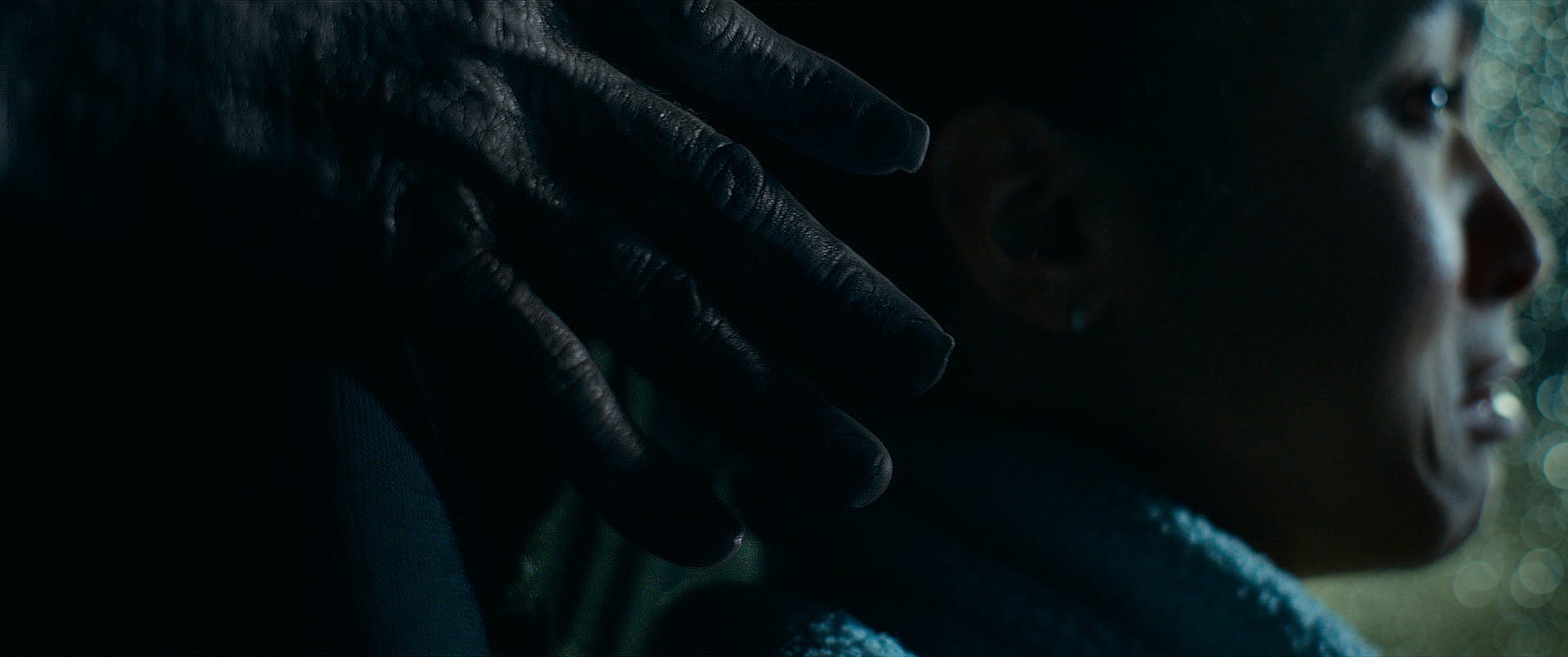
There is some digital enhancement later in the film, but the essential presence is practical, embodied, and physically there with the actors. That decision matters. Horror often becomes more effective when performers are reacting to something tangible rather than an empty space that will be filled in later.
Building jump scares
Still, monsters are only one part of the equation. If there’s one theme Øvredal returns to repeatedly, it’s that horror is ultimately about construction.
“I’m most interested in the build-up,” he says. “Jump scares are part of the genre. You have to work with them if you’re making horror. But I don’t structure my filmmaking around jump scares. What I really enjoy is building tension from the very beginning of a sequence.”
That distinction is crucial, especially in an era where jump scares are often treated as either the essence of horror or its lowest common denominator. In reality, the jump scare itself is rarely the point. Without tension beforehand, it’s just a sudden loud interruption. What gives it meaning is everything leading up to it.
Øvredal is refreshingly transparent about where his approach comes from.
“This is just Hitchcock,” he says, grinning.
But he isn’t being flippant.
“It’s all about information given to the audience. Through the script, through directing, through the combination of both. What information the audience has at any given moment, and how much you choose to withhold.”
That’s suspense in its purest form. The audience needs enough information to anticipate danger, but not enough to fully understand it. Anxiety lives in that gap.
“All my experience, from when I started making horror films at 14 until now, tells me that’s where the gold is,” he says. “That’s how you create tension curves and eventually build toward a jump scare. It’s about the build-up, and then finding some way to knock the audience off balance right before the scare.”
The phrase “off balance” is especially revealing, because it gets at what horror really does when it works. It destabilizes the viewer. It creates a temporary loss of certainty, a subtle erosion of control.
At one point, the conversation turns into something close to a miniature filmmaking seminar when Øvredal breaks down one of Passenger’s standout sequences, a parking lot scene that has apparently become a clear audience favorite.
And before we continue, a slight jump scare spoiler warning.
“It’s one of the scenes I’m happiest with,” he says. “We shot the whole thing as one long take, which involved a lot of complicated choreography.”
What follows is a remarkably precise explanation of how suspense is engineered.
“She leaves the gym wearing earbuds, like a normal person would, crossing what appears to be a perfectly ordinary parking lot. We follow her, and the sound becomes very much hers. You hear her music faintly. We’re close to her point of view.”
That immediately aligns the audience with her perception.
Then comes the controlled distribution of information.
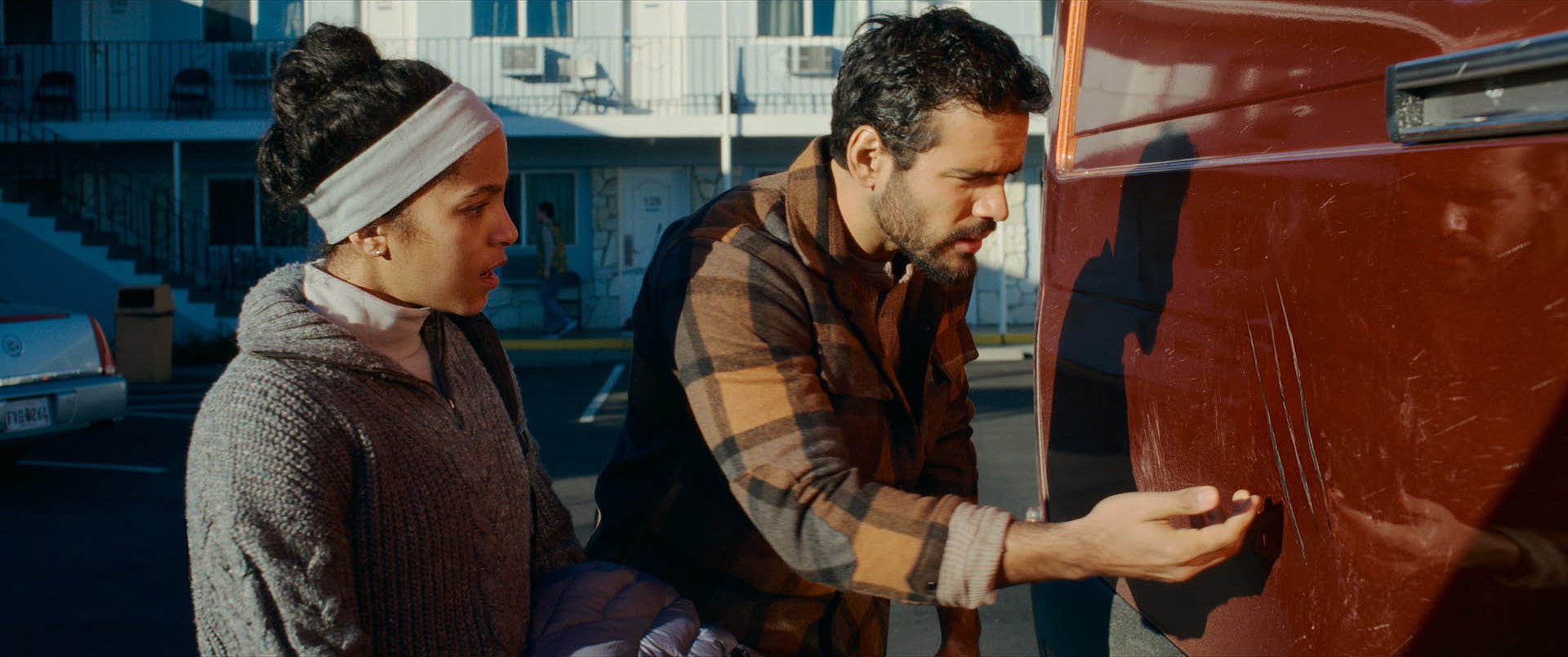
“We’re constantly feeding the audience information about what’s around her. The moment she walks out, we turn the camera behind her to show the objective of the scene, the van. It’s red, so it’s easy for the audience to identify. We hold it just long enough for me to know they’ve registered where we’re going.”
Then, deliberately, attention is redirected.
“She passes the car with the two suspicious guys inside. That’s a red herring. A deliberate misdirection.”
This is the kind of explanation horror fans love hearing, because it reveals just how calculated effective suspense can be. Nothing about the sequence is accidental. The audience is being guided, distracted, reassured, then subtly unsettled.
“Then we slowly swing the camera back to start building tension again,” he says. “We’re essentially stressing her environment, choreographing discomfort around her.”
He knows it works because test audiences told him so.
“I’ve seen the test screenings. It’s overwhelmingly the audience favorite.”
How to scare a horror director
For someone who has spent much of his career crafting fear, what does horror even mean on a personal level anymore? Has he become immune?
His answer goes somewhere unexpected.
“The most uncomfortable viewing experience I’ve had in recent years, post-COVID, was actually Chernobyl.”
Not horror in the conventional sense. No monsters. No supernatural threat.
But his reasoning makes perfect sense.
“Partly because I remember when it happened, when I was a kid,” he says. “But also because it’s just horrifying. The claustrophobia. The fact that people aren’t being informed about what’s happening. They walk blindly into situations trusting authority to tell them the truth.”
That answer says something profound about fear itself. The most unsettling stories are often not the ones involving impossible creatures, but the ones rooted in helplessness, uncertainty, and institutional failure. Horror may use supernatural metaphors, but what unsettles us most is often deeply human.
When it comes to the films that shaped him, Øvredal’s list is reassuringly classic.
“The Exorcist. The Shining. The Omen. Poltergeist. The ones that still sit there as five-star films.”
None of those choices are surprising, but they reinforce everything he has already said. These are films built not on isolated shocks, but on atmosphere, structure, patience, and carefully controlled escalation.
As the conversation winds down, talk turns briefly to what comes next. Details remain under wraps, but one thing is clear.
“I’ll be going into production on another film this year.”
And yes, it’s horror.
“There’ll be more horror,” he says, smiling. “I have to. I enjoy it too much.”
That may be the simplest explanation for why André Øvredal continues to be such a compelling horror filmmaker. It’s not just that he understands the technical mechanics of fear, or that he can clearly articulate how suspense works. It’s that he still seems genuinely fascinated by the process itself, by the strange relationship between filmmaker and audience, by how tension can be quietly constructed through information, timing, sound, and perspective until viewers find themselves gripping their seats without entirely realizing why.
Passenger may function perfectly well as a stylish road horror about a demonic figure stalking dark American highways, but the conversation surrounding it reveals something more enduring. Horror, at its most effective, is rarely just about the monster. It’s about that fragile moment when certainty slips away, when the rules stop making sense, and when the audience realizes, just a second too late, that control is gone.