

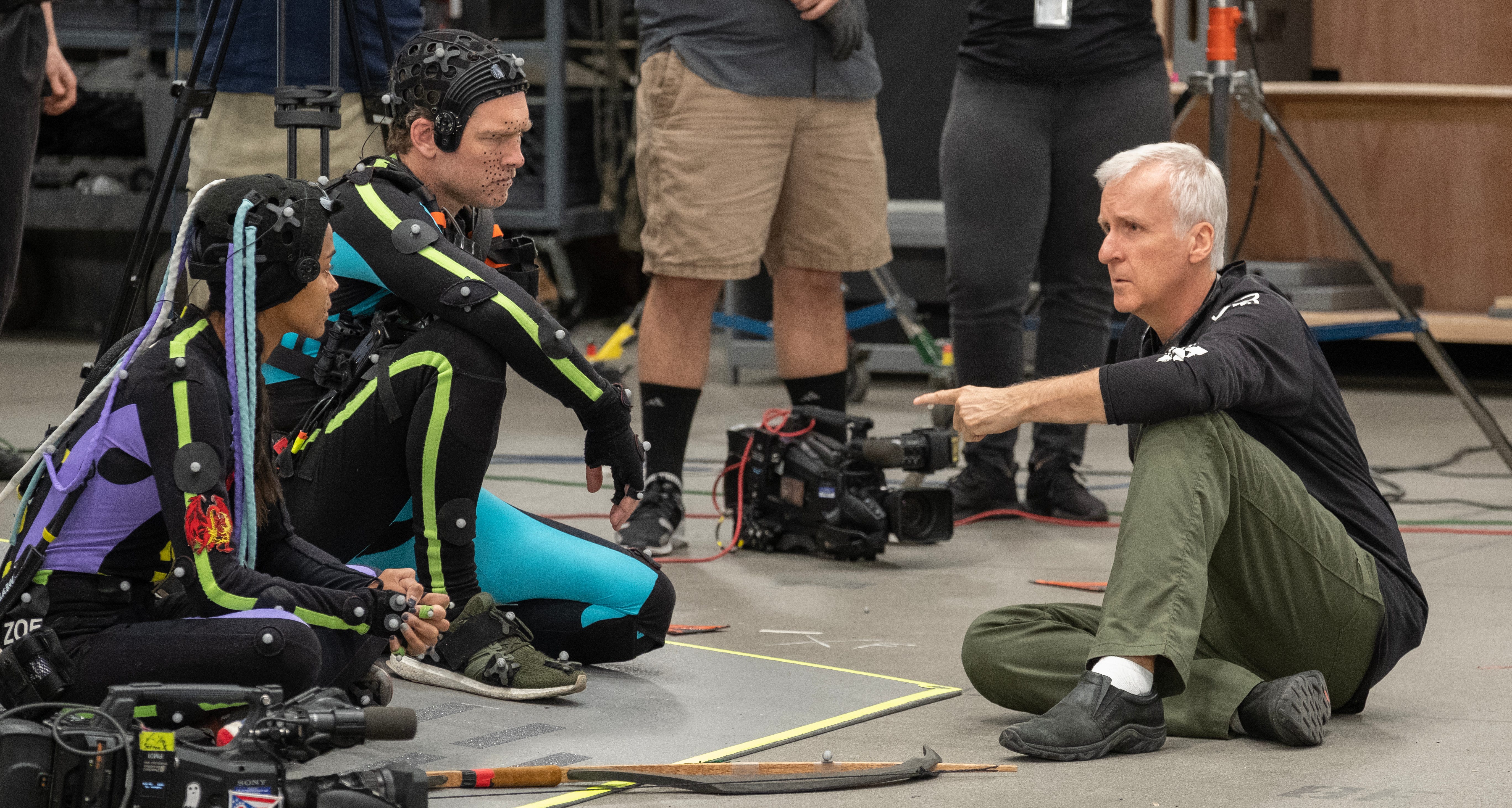
For more than forty years, James Cameron has been chasing visions most filmmakers would consider impossible. From The Terminator and Aliens to The Abyss, Titanic, and the first two Avatar films, his work has always carried the same DNA: technological reinvention in service of his blend of technical ambition and character-driven drama.
With Avatar: Fire & Ash, Cameron is returning to Pandora at a moment when he feels both the world and the art form are in a state of deep transition. And in conversation, what stands out isn’t the scale of the new film, but a kind of unfiltered honesty running underneath it.
On December 2nd, 2025, I joined other journalists from the Golden Globe Awards in a Zoom conversation with James Cameron to talk about his third installment in this pantheistic science fiction epic.
Grief and Family
He begins by laying out the evolution of the saga. “In the first film, we established a world and a relatively simple love story, because our eyes were focused outward on everything around us and the new creatures. It was shockingly new. Nobody had seen anything like that before. I’d never done anything like that before.”
“The second film,” he continues, “takes you to different parts of that world, and we start to make the plot more complex and introduce new characters, including the Tulkun and the Reef People.” Now, he says, “we go to a next level of complexity with the new film by introducing the Ash People. But also because we’ve had this tragic event in movie two — the death of the eldest son.”
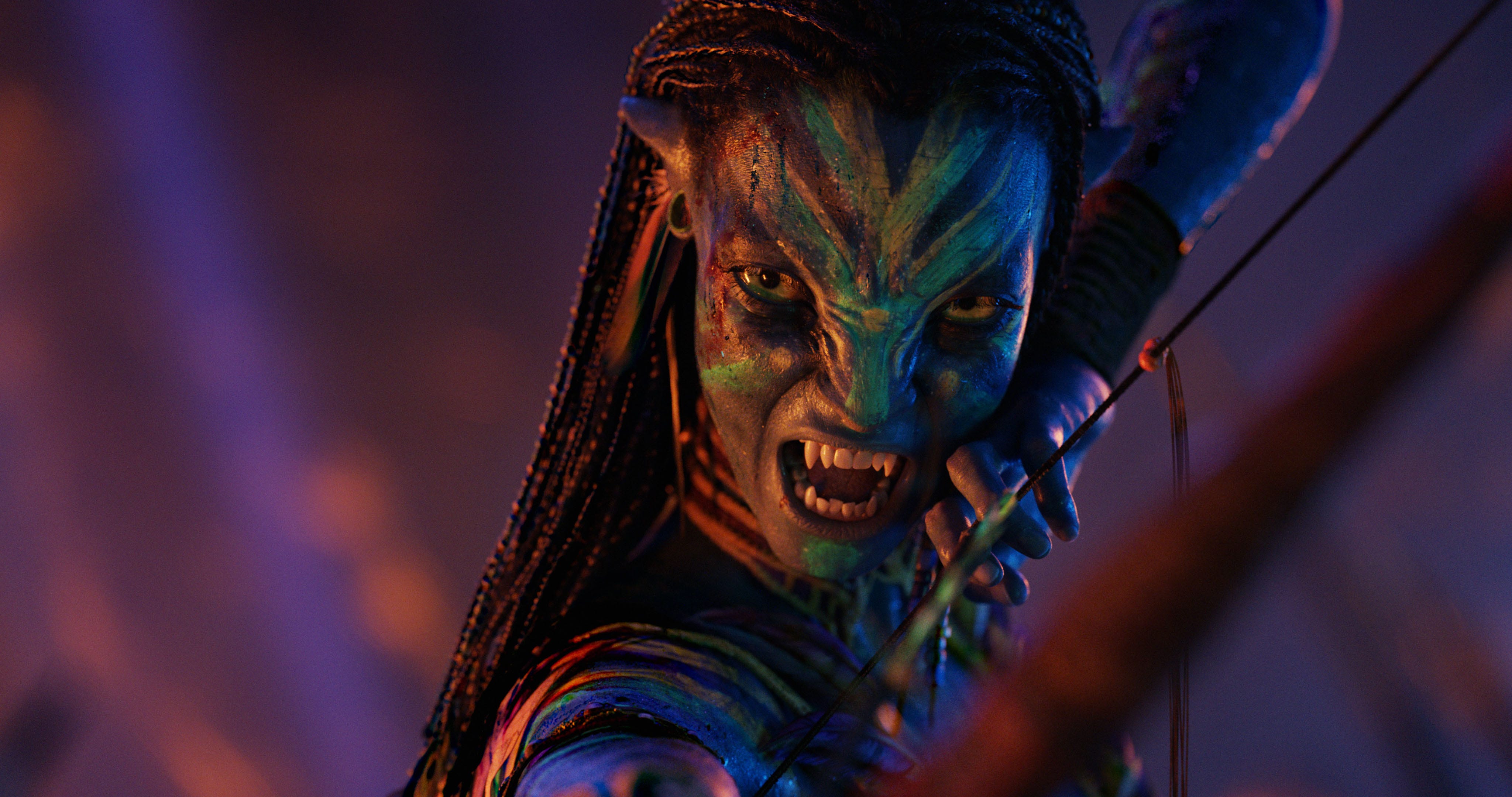
He says the grounding of Fire & Ash came from an instinct that grief needed to be treated honestly. “I felt it was really, really important to ground the film in authentic human responses to things like trauma and loss and grief. Commercial filmmaking tends to gloss over that stuff. Usually when somebody dies in a movie, the wife dies and the husband goes on a killing rampage, and we all celebrate that violence for the next two hours. I don’t think commercial filmmaking deals with it honestly and authentically.”
He adds, “I’ve had a lot of loss in my personal life over the last ten years or so. And grief doesn’t just stop like that. And it’s not a trigger to just go.”
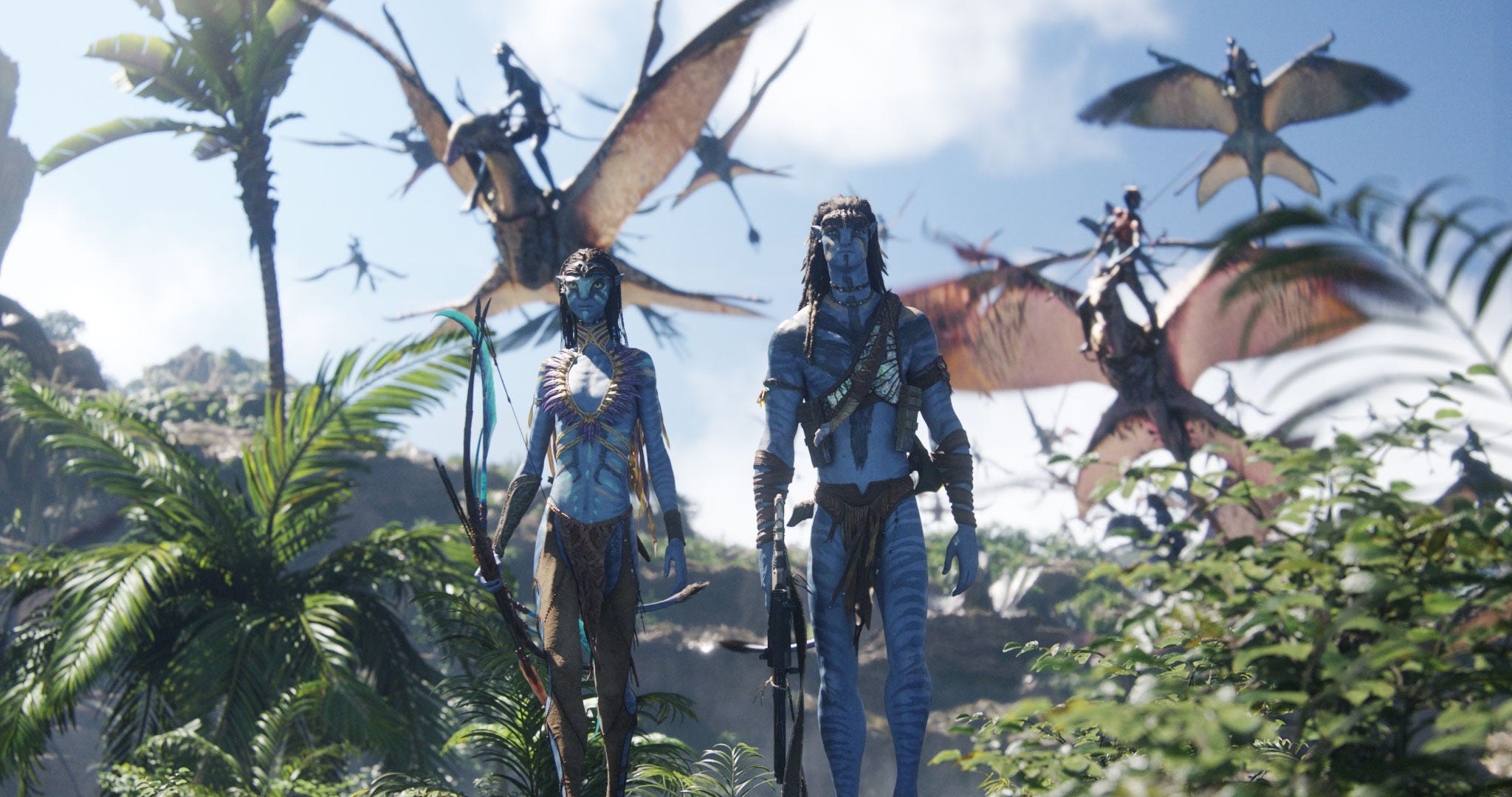
The consequences of this loss reverberate most sharply through Neytiri. “Neytiri becomes very kind of dark,” he says, “and she starts to live in a kind of hatred, which makes her kind of a racist. And she’s got to fight her way through that and see people for their values and for the good that’s inside them regardless of the color of their skin.”
For Cameron, the emotional weight of this chapter is also a chance to highlight the cast. “What we’re doing in that volume when we’re doing performance capture is some of the best work these actors have done in their careers. And we’re talking about Academy Award winners Kate Winslet and Zoe Saldaña, three-time Academy Award nominee Sigourney Weaver. And they will tell you this is some of the best work they’ve done, but it tends to get overlooked.”
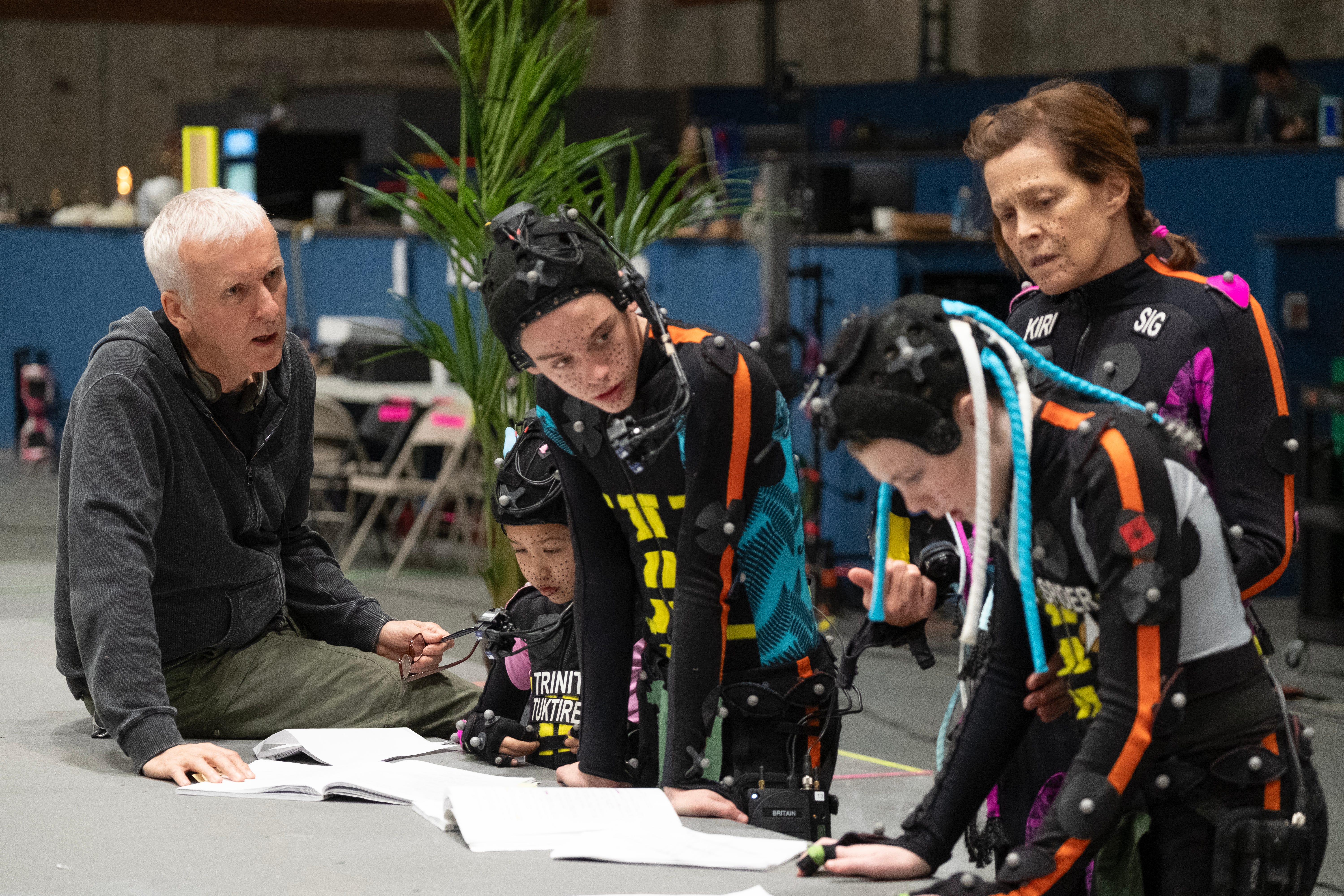
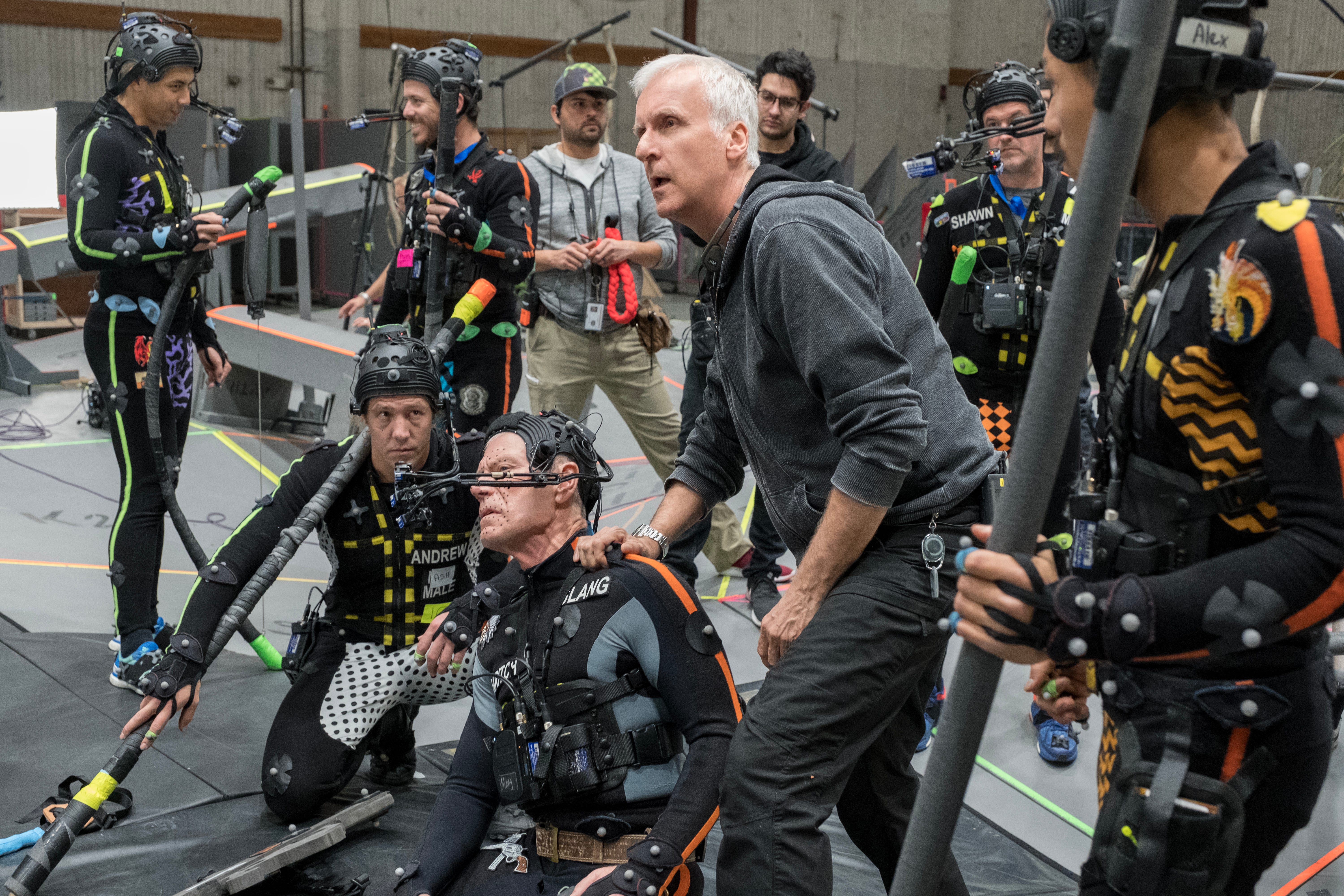
He clarifies a point often misunderstood: “I still read in the media from time to time that Sigourney Weaver voiced Kiri. She didn’t voice Kiri. She performed Kiri for eighteen months. It took six months to shoot Titanic. We worked three times that long. If this was just voicing, we’d be done in days, not months or years.”
On his directing process, he says, “I’m a very prepared director when I’m shooting live action. But when I’m doing capture, it’s very free. I don’t previs it. I don’t storyboard. I don’t tell the actors where to stand. I let them find the scene.”
Building Pandora
Cameron explains that the biology of Pandora grows from real ecological principles. “We tried to make it a consistent ecosystem. We were very inspired by the biological systems of our own planet, which are rich, which are diverse. But we think there are certain rules that probably would apply to an alien ecosystem — animals that herd together, animals that are herbivorous, animals that are predatory. They’re gonna look a certain way. They’re gonna be configured a certain way.”
In the ocean, he says, “you’re gonna have big apex predators. You’re gonna have schooling fish. They school for a reason — so maybe they don’t all survive, but they survive as a group.”
He also reveals an early design challenge: “When I decided the Na’vi should be blue, we thought maybe the foliage in the forest should be a cyan blue-green so it makes sense as camouflage. But when we tried it, it all looked desaturated — like we’d thrown a blue filter over the whole forest. So we said, all right, forest has got to be green. Now the Na’vi are blue. Why are they blue? They don’t fit in. Well, forests aren’t orange and a tiger blends in, right? It’s a question of patterning and stripes and things like that.”
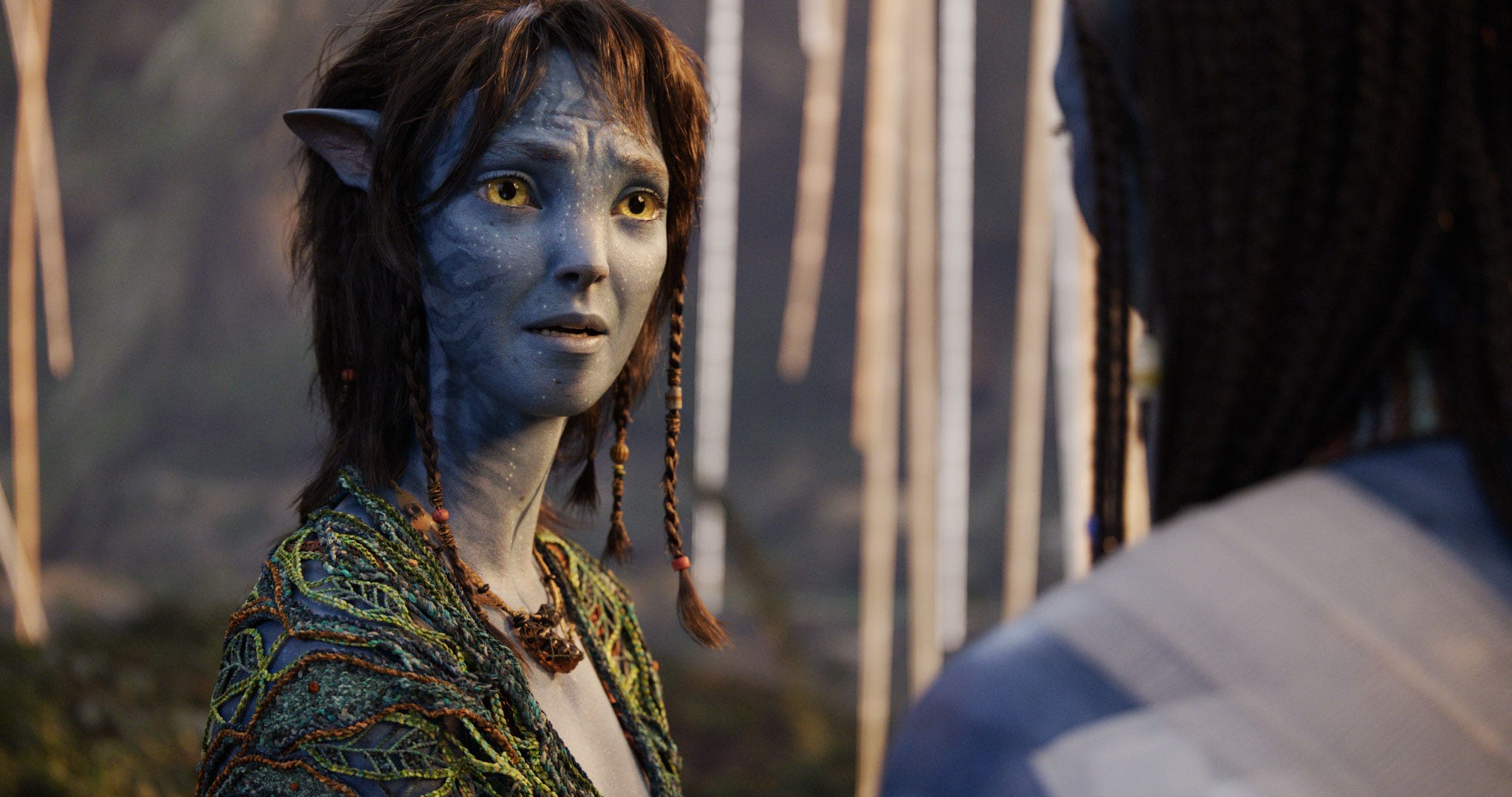
As for genre, he says, “These films are really more of an allegorical fantasy than a hard science fiction. If you think of a movie like Arrival, they don’t look like us, they don’t think like us, they don’t even perceive spacetime the way we do. That’s true science fiction. The Avatar films are more of an allegorical fantasy.”
Setting the story on a distant planet allows him to address contemporary issues without triggering cultural defenses. “We set it on another planet so that we can deal with all of our problems that we have right here on Earth — hatred, mistrust, detachment from each other, lack of empathy — but without people thinking of a particular government or religion or country.”
Displacement and Identity
He continues: “The Sullys are displaced, right? By violence. Jake leaves to keep his people safe. But it doesn’t matter — the enemy is chasing. Anybody that’s been displaced from their home, that’s going to be emotionally very traumatic.”
Neytiri voices this directly in the film, he says: “‘I don’t have my forest. I don’t have my people that I grew up with.’ She feels like a stranger in a strange land.”
Spider represents another dimension of belonging. “Spider desperately wants to be Na’vi. He paints himself blue. He tries to be part of the Sully family. Neytiri’s not having it because she’s gone to this very dark place. But Spider is accepted by the next generation. I think we see these trends — hatred sometimes stops with the next generation.”
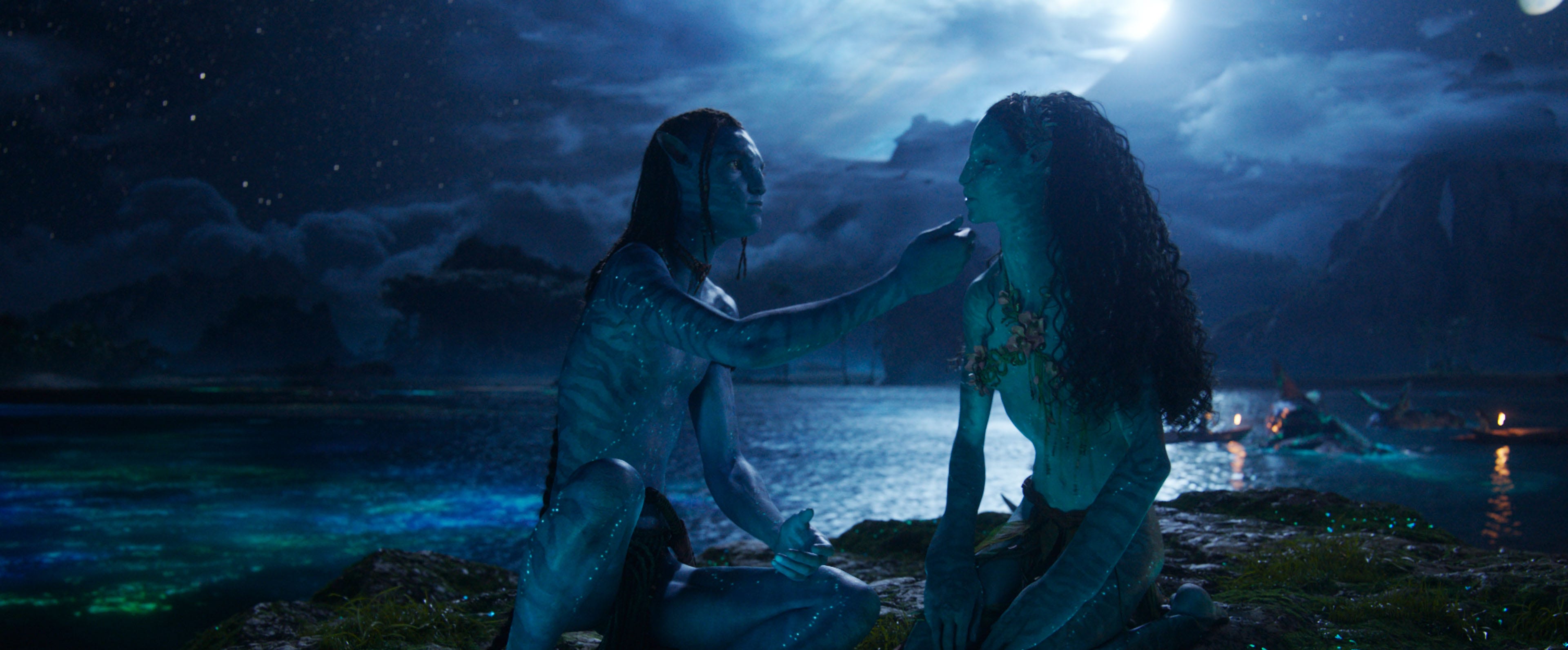
On choosing Lo’ak as the storyteller, Cameron says: “Jake has been our storyteller, but Jake can’t tell Lo’ak’s story because Jake doesn’t understand Lo’ak. Lo’ak feels like an outcast. He feels like an outsider even in his own family at times.”
He connects this to the family’s identity: “They’re mixed-race kids. Everybody knows that Jake is part human, and that tension is there in that marriage. Stress number one. Now you’re at war, and you’re a mixed-race family living in a new place and trying to fit in and be respected and seen.”
The Economics of Ambition
Cameron laughs when asked about the financial side: “It’s the stupidest business model in history. In order to succeed, the film has to be in the top ten of highest-grossing films in history before we’ve written a word, before we’ve shot anything. Everybody thinks it’s a great idea to make an Avatar movie — until you look at the math.”
But he emphasizes the upside: “The more money we spend, the more jobs we’re making. There are 3,800 names in the credits of this film. That’s 3,800 jobs.”
He also points out the reality of the theatrical market: “We’ve dropped down about 30 to 35 percent since COVID and since streaming. People have habituated to accepting their media on streaming. If they’re going to a movie theater now, they want to see something special. They don’t want a movie — they want an experience.”
On releasing at Christmas, he says, “If you release right before Christmas, you’re moving into a big holiday weekend. If you can get a foothold with a long film, you need time for people to make an appointment to go see it. Titanic was number one for 16 weeks. Avatar followed a similar trajectory.”
“These films are about the heart,” he adds. “Parents might want to take their kids — teens might think, maybe I’ll go get my mom.”
The Challenges of AI
Cameron distinguishes between forms of AI: “There’s little AI and there’s big AI. Big AI is an artificial superintelligence — that’s a big problem for human civilization. That’s not what we’re talking about. We’re talking about generative AI.”
He is candid about his skepticism: “If you take everything everybody’s ever done and put it in a blender and get a result, how is it not the average? It’s not the idiosyncratic, unique view of an individual artist and their lived experience. I want to read a script by somebody that’s gone through some stuff individually, not the average. I don’t see how you don’t get to mediocrity that way. Does it work? Yeah, it works — that’s the scary thing. But that’s not how I want to generate images. And I certainly don’t want to replace actors.”
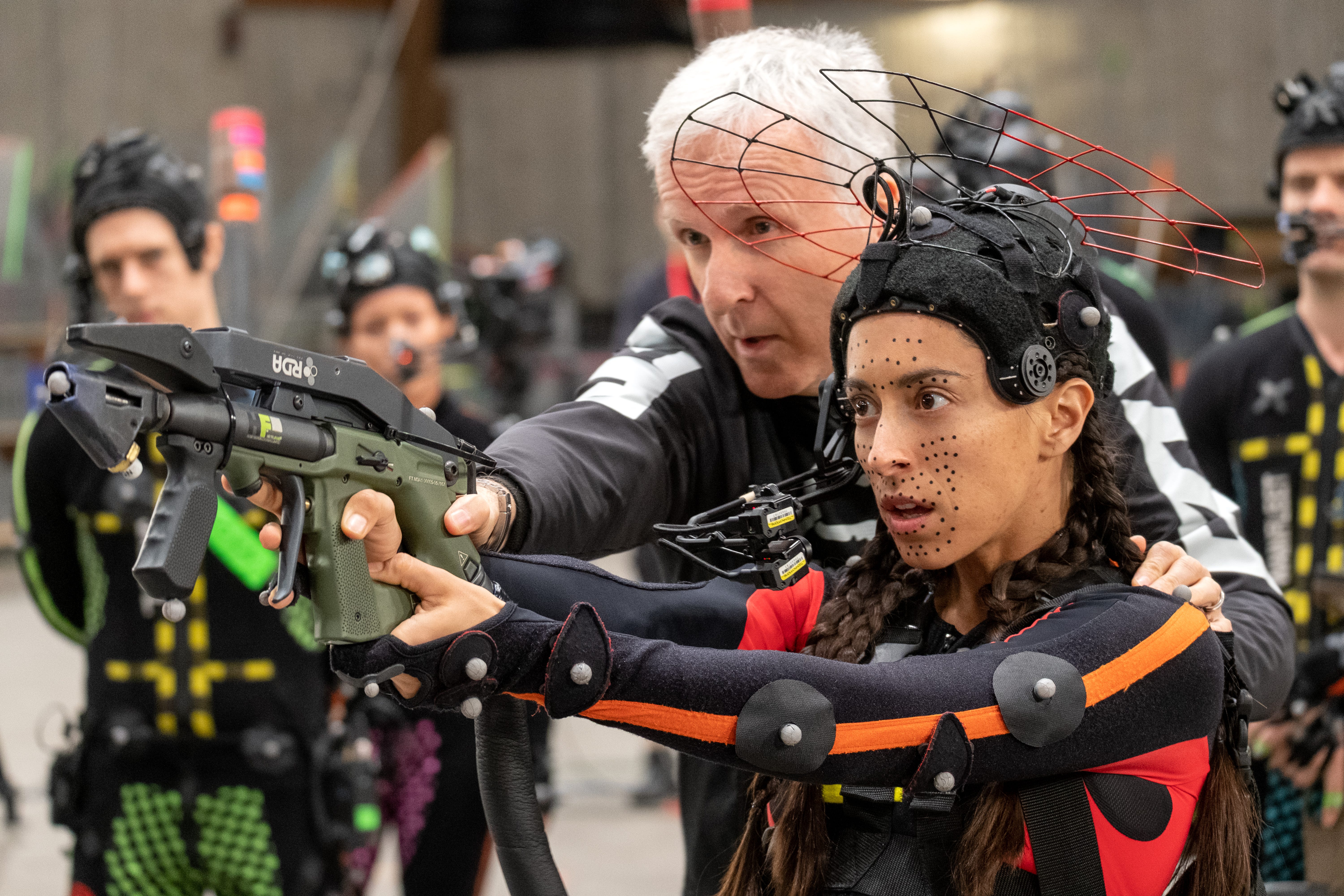
“That’s another reason I’m speaking up,” he says. “Our process has always been, on the Avatar films, a very actor-originated, actor-centric process. We celebrate the actor, and we consider that the sacred moment of creation. Generative AI is exactly the opposite. We could have a younger generation of filmmakers coming up who say, ‘I don’t need actors. I can get my brilliant idea on the screen without even dealing with actors. I can make up characters.’ But then you lose that moment where you pass the baton to an actor and it becomes their unique version of the character.”
He pushes back against any easy headline. “Now, it’s not that simple,” he says. “Everybody in the room would run out and say, ‘Jim Cameron hates AI, thinks it’s gonna ruin Hollywood.’ That’s not the headline. Avatar movies and the kind of big films that I love and have always loved cost too much. Visual effects processes are expensive. Costs rise and theatrical revenues have come down, and they may continue to come down. At a certain point, where they cross, those movies cease to exist.”
He worries about what that means for the next generation. “There may be a few people out there, like me and Steven Spielberg and Denis Villeneuve and other filmmakers that have a track record in this. But how do young filmmakers come up and get into fantasy and science fiction at scale? How are they gonna do that? That’s starting to close out.”
“So if generative AI can be a genie that’s out of the bottle that can be tamed to do certain parts of an actor-centric workflow, and that brings the cost down — even modestly, say 35 percent — that takes the place of the lost revenue we’ve been experiencing since COVID. It might be a kind of Hail Mary pass that’s available to us now. I can’t tell you that’s the case because I haven’t worked in it.”
He mentions his position on the board of Stability AI as “a way to study that business, see how it’s done, how they think, how the developers work,” and says he has challenged them to build tools that can plug into existing VFX workflows. “My idea is not to make human artists obsolete, but to speed up our cadence. I’m 71. How many more Avatar movies can I make when it takes me eight years to do two films, or ten?”
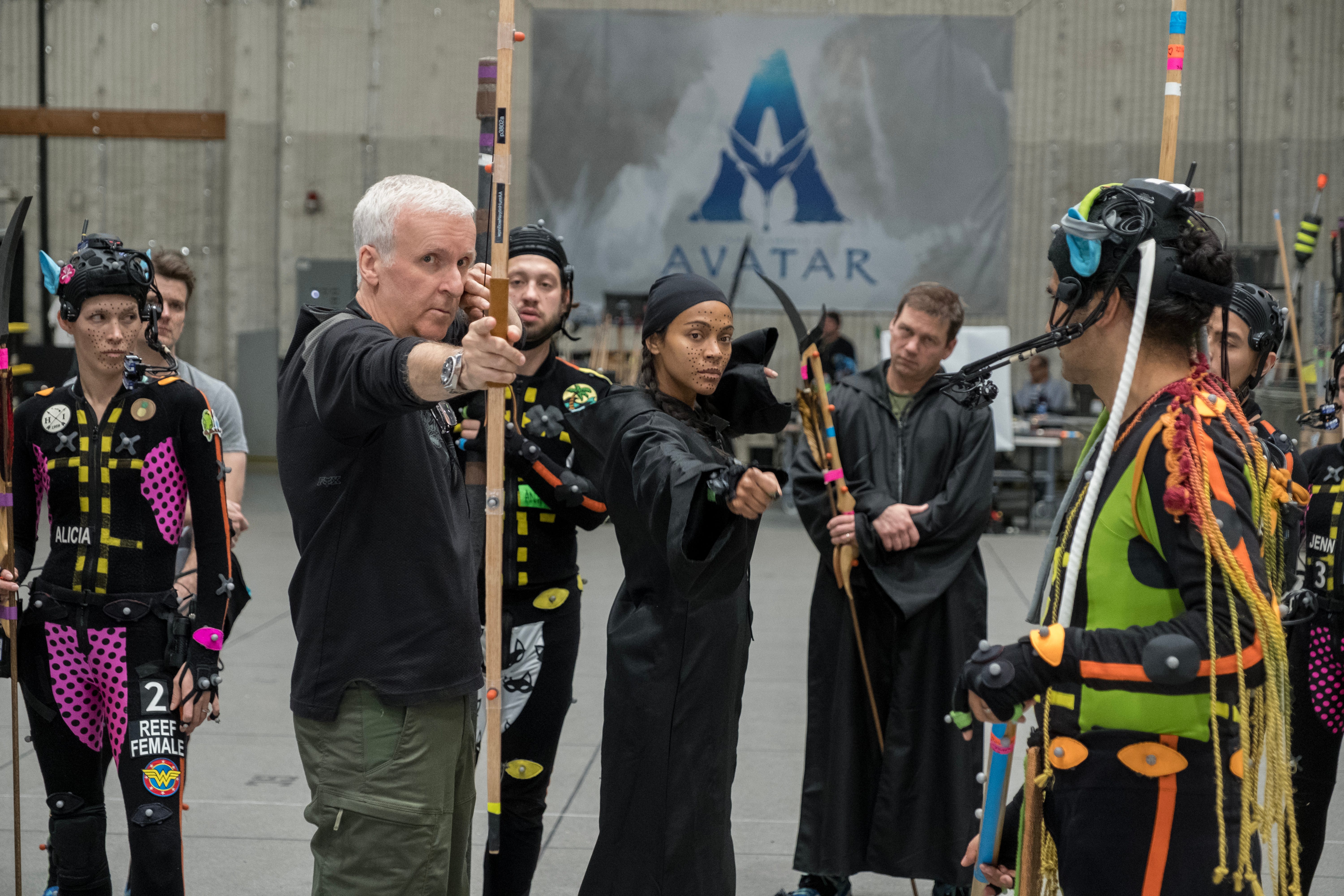
“If I could shorten that, that’d be great,” he continues. “Then I have the same number of artists just working faster and more efficiently, and the next day, when we finish the film, we go on to the next thing. Maybe it’s another Avatar movie, maybe it’s something else. There could be some economic value that improves our filmmaking and improves the financials of the theatrical marketplace. But I can’t guarantee that. It’s an instinct that I have. And I’m gonna say clearly — it’s an instinct.”
He laughs that he’s been right about a lot of things before. “I had an instinct about CG when I did The Abyss. In ’88, ’89, we started fooling around with CG for the first time. My instinct was: it’s going this way. So then I did Terminator 2. Then after that, I founded Digital Domain, which was the first all-digital major visual-effects company. That proved to be true. I’ve been right on a lot of things. Doesn’t mean I’m right this time. We’ll see.”
The Human Thread
When the subject shifts back to technology more broadly, Cameron stresses that the tools themselves are not the point. “Most of what we’ve developed has been in the service of creating an authentic sense of reality for the audience,” he says. “You feel like what you’re seeing is impossible, but it looks real. We try for a high sense of reality.”
He points out that cinema has always been technical. The difference now is how quickly innovation spreads. “Almost everything we’ve developed has been adopted by other filmmakers as well,” he says. “I’m proud of that — that it gets adopted beyond just the Avatar films. It’s a rising tide that raises all ships. We’re not an insular culture at Avatar. We’re very open source. We’ll show anybody what we do. If other filmmakers want to learn from us or adopt some of our techniques, that actually benefits us. It’s enlightened self‑interest.”
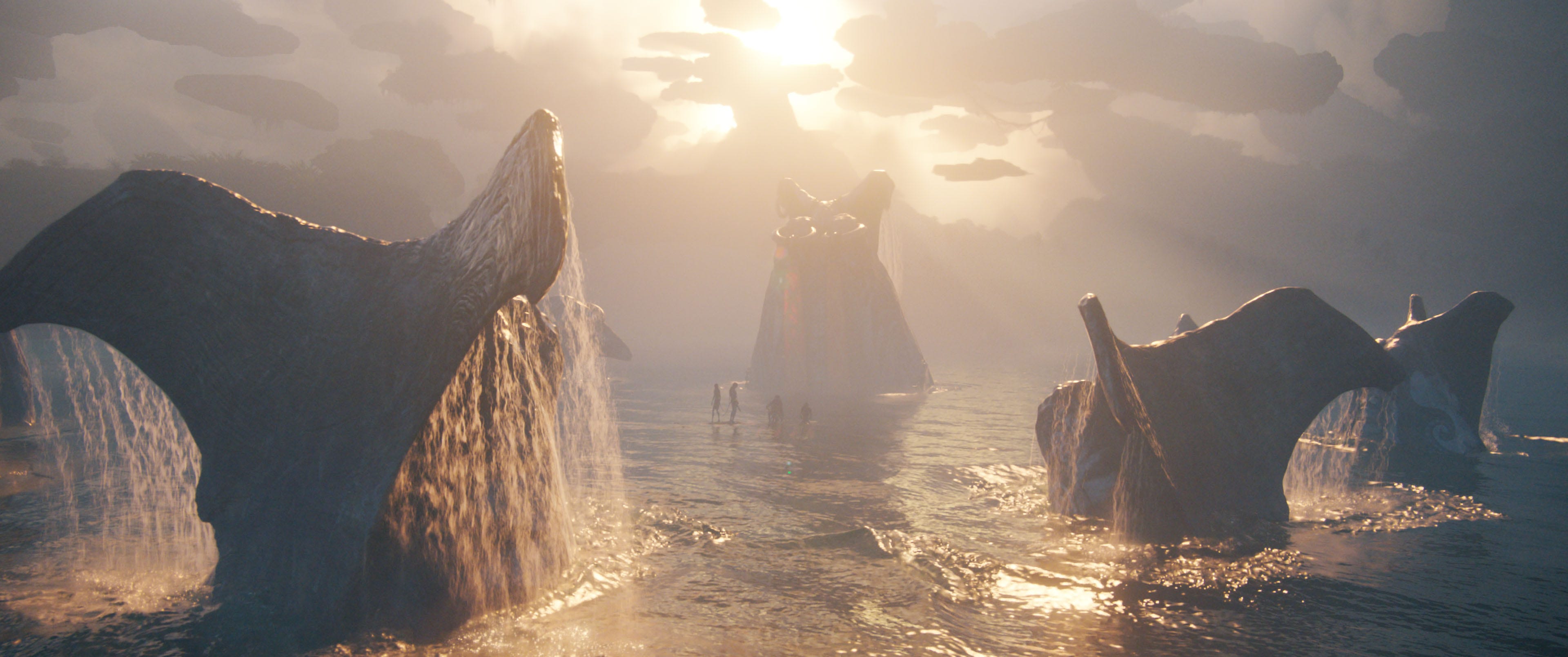
By the end of the conversation, Cameron still sounds like the kid who fell in love with the big screen, just armed with far more data, tools, and scars. He talks about grief and family with the same seriousness he brings to ecosystems and render times. He is suspicious of easy answers, blunt about risk, fiercely loyal to actors, and stubbornly in love with the idea of people gathering in the dark to be taken somewhere else for a few hours.
Avatar: Fire & Ash may be built on cutting-edge tools and workflows, but it is driven by something far older: a belief that stories matter more when they come from people who have actually lived through something — and that the most advanced image in the world still isn’t worth much if there’s no human pulse behind it.
Enjoyed your thoughts. You may like my list of favorite movies https://simonsobo.substack.com/p/greatest-movies-list