
Review: 'House of the Dragon' (Season 3)
The best series in the Westeros-franchise is back, and it flies higher than ever

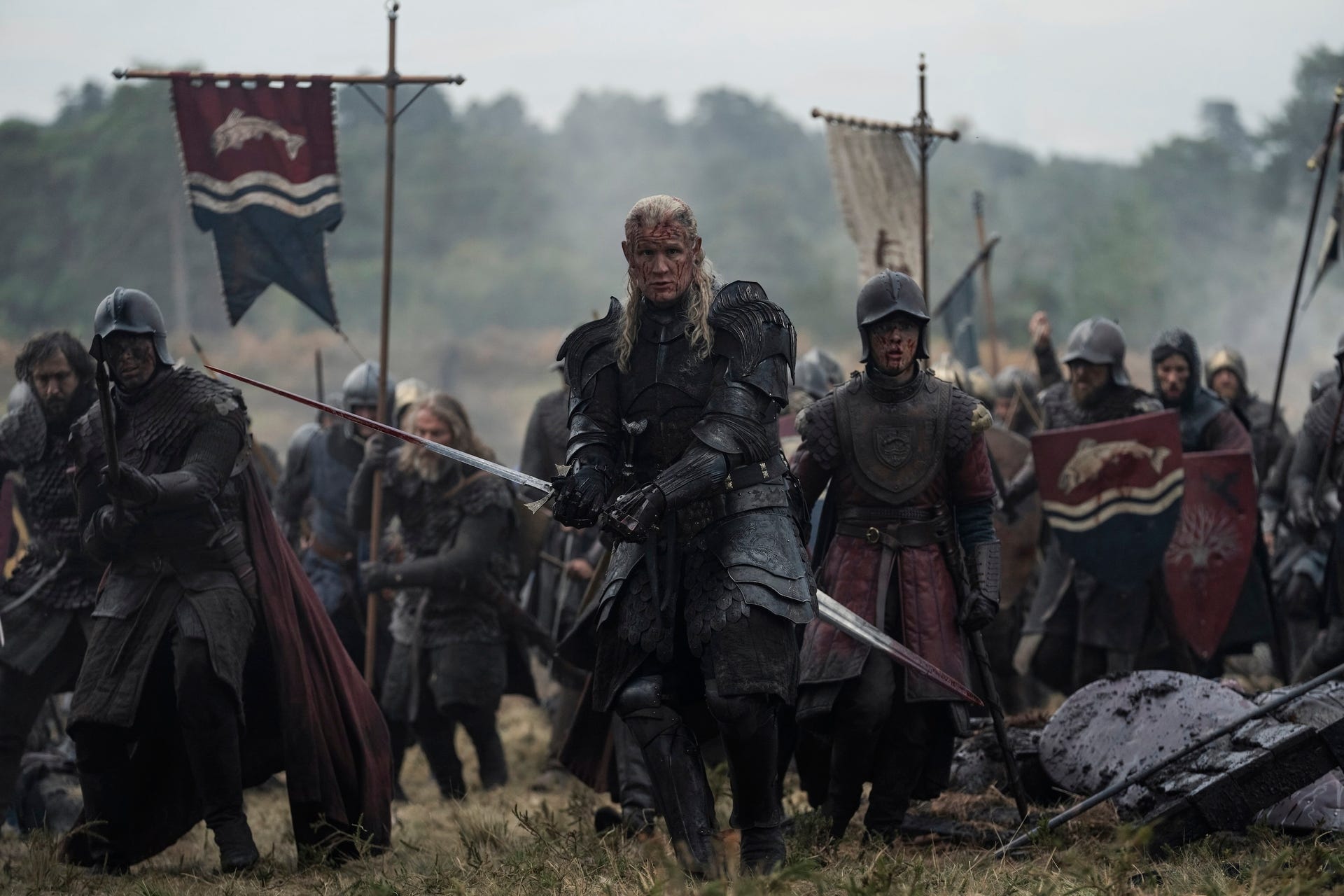
Westeros is on fire. After two seasons of House of the Dragon – based on George R.R. Martin’s Fire & Blood (2018), a chronicle of the Targaryen dynasty’s history – we are now in the third of four planned seasons. The series follows the fracture within the Targaryen family and the brutal struggle for dominion over Westeros: a world where power-hungry rulers ride fire-breathing dragons that function, in practice, as weapons of mass destruction in a world otherwise armed with swords and catapults.
George R.R. Martin’s historically inspired fantasy world was first brought to screen in HBO’s Game of Thrones in 2011, based on his novel series A Song of Ice and Fire. House of the Dragon takes place several hundred years earlier, yet everything is connected – stories of war and power stretching across hundreds, in some cases thousands, of years. We have also recently been given the critically acclaimed A Knight of the Seven Kingdoms, with a more intimate and local story, but with events that will nonetheless have far-reaching consequences for the rest of Westeros.
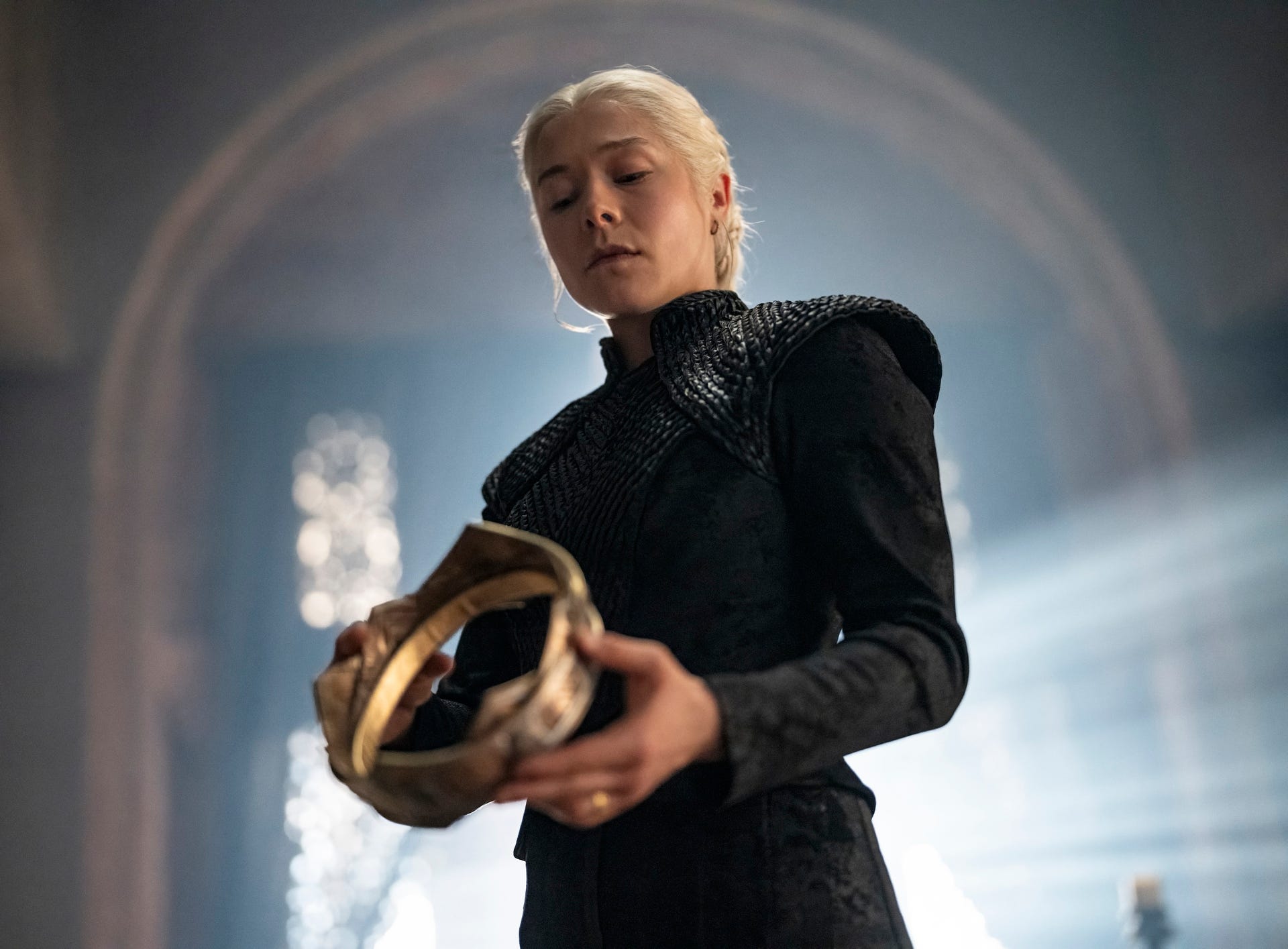
The Targaryen family’s self-destructive civil war has reduced much of Westeros to ash in the fight for the right to rule. It all began with a well-meaning but weak king – Viserys I – whose last ambiguous words set two factions on a collision course. On one side, Rhaenyra Targaryen (Emma D’Arcy), named by her own father as the rightful heir to the Iron Throne. On the other, Aegon II Targaryen (Tom Glynn-Carney) – placed on the throne by his mother’s family, House Hightower, in a coup Rhaenyra can never forgive. It appears, on the surface, to be a story of right and wrong, of promises and betrayal. But beneath the surface pulses something far more recognizable: greed, lust for power, and an unyielding will to dominate – not unlike the conflicts we read about in our own newspapers every morning.
The war escalated gradually, with battles, intrigue, and a desperate race to acquire more dragons and dragonriders – for in Westeros, dragons are not merely symbols of power, they are power. Whoever controls the most, wins. It ended with Westeros on the brink of total war: Alicent Hightower (Olivia Cooke) offered to surrender King’s Landing, but Aegon II had already fled the city with the scheming Larys Strong (Matthew Needham), while his brother Aemond (Ewan Mitchell) had positioned himself at the center of the power struggle.
Season 3 begins exactly where we left off. The badly wounded Aegon II is on the run with the limping, calculating Larys Strong – the king’s eyes and ears, a man who always survives, regardless of which side is winning. Back in the capital, the one-eyed and merciless Aemond has seized control, riding Vhagar – the largest and most dangerous dragon alive. On the other side, Rhaenyra has secured new dragonriders among Targaryen descendants of dubious lineage, and for the first time, their house hold a genuine advantage in what increasingly resembles an arms race over who can field the most dragon wings in war. Westeros is no longer on the brink. The war is total.
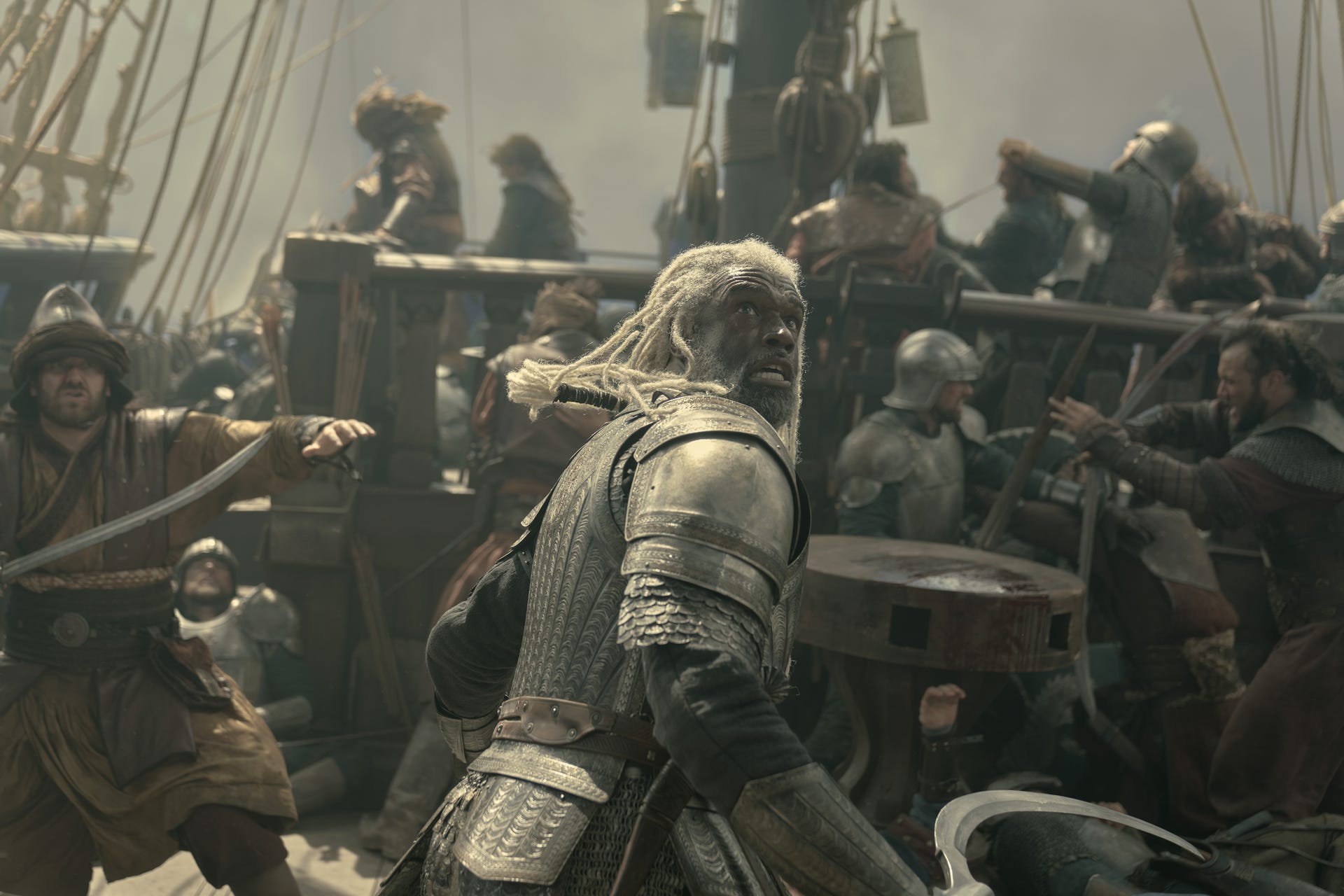
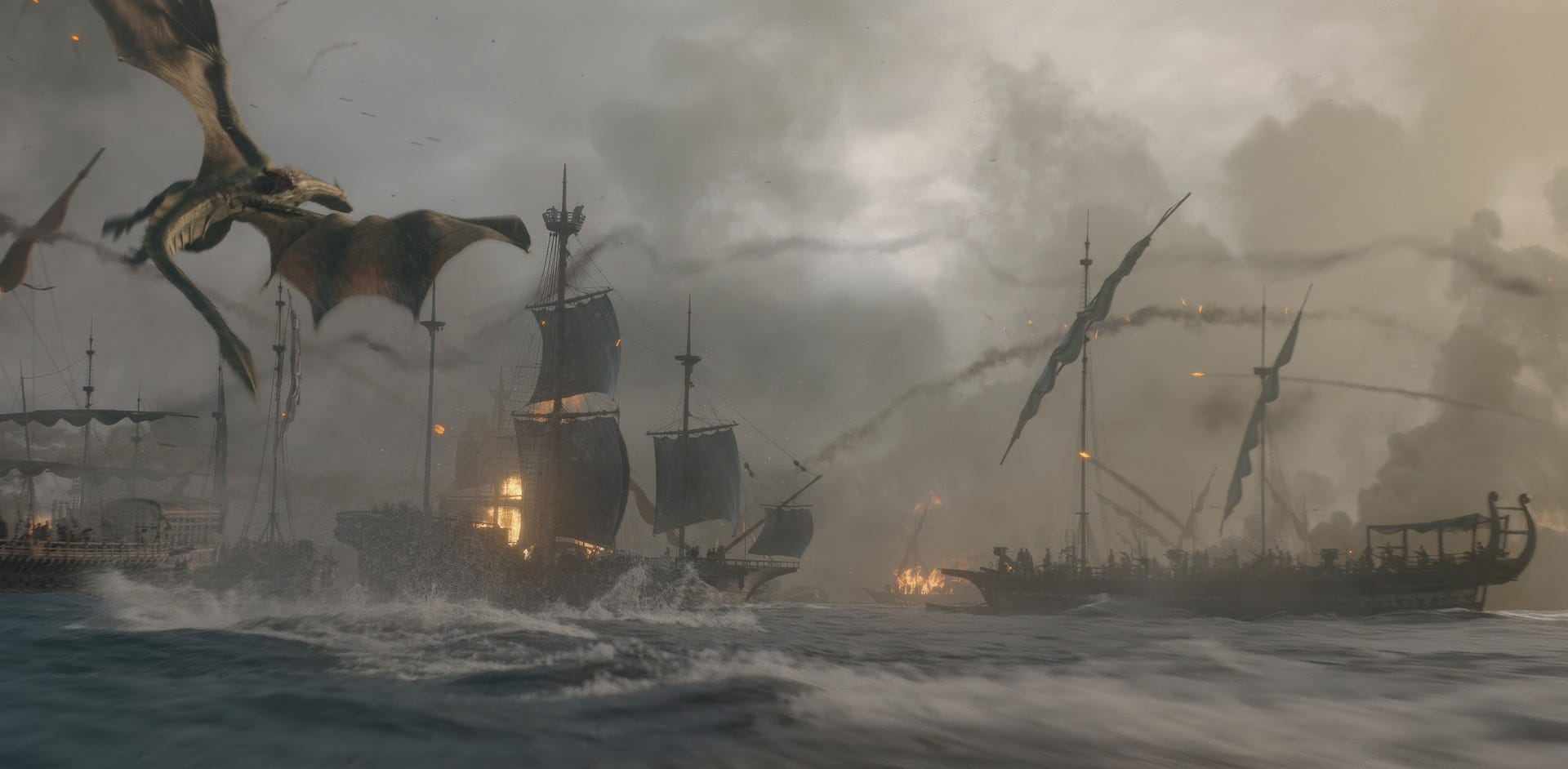
Everything leads to the decisive naval battle in the strait between King’s Landing – the city where the Iron Throne stands, which everyone believes is rightfully theirs – and the dragon fortress of Dragonstone out in the open sea. Here, the seasoned seafarer and lord Corlys Velaryon (Steve Toussaint), known as “the Sea Snake,” leads a massive fleet in service of Rhaenyra Targaryen. Against him stands the Triarchy fleet – a hired alliance of warlike city-states from the other side of the world, set to defend King’s Landing. At its head is the unpredictable admiral Sharako Lohar (Abigail Thorn), driven as much by personal honor as by military strategy. The result is one of the most expansive naval battles ever put on screen.
George R.R. Martin’s Westeros – encompassing Game of Thrones, House of the Dragon, A Knight of the Seven Kingdoms, and the upcoming Aegon’s Conquest – is not what you would call traditional sword-and-sorcery fantasy. There are no wizards, elves, or dwarves, and neither heroism nor villainy is reserved for heroes and villains. Black and white drown in a sea of blood and moral ambiguity.
House of the Dragon is carried by a massive ensemble of skilled actors, who largely align themselves on either side of the civil war – either behind Rhaenyra Targaryen and her claim to the throne, or behind House Hightower and the fleeing Aegon II.
There are too many strong performances to mention them all, but several stand out this season. Emma D’Arcy is, as always, the anchor of the series as Rhaenyra Targaryen – a queen whose decisions carry the weight of an entire world. Matt Smith (Daemon Targaryen) brings the character an almost dangerous charisma. Steve Toussaint is commanding and melancholy as Lord Corlys Velaryon. But the revelation of this season is Tom Glynn-Carney as the burned and fleeing Aegon II – a character we have previously known as arrogant and power-hungry, but who now, stripped of everything, reveals a human vulnerability that is both unexpected and genuinely moving.
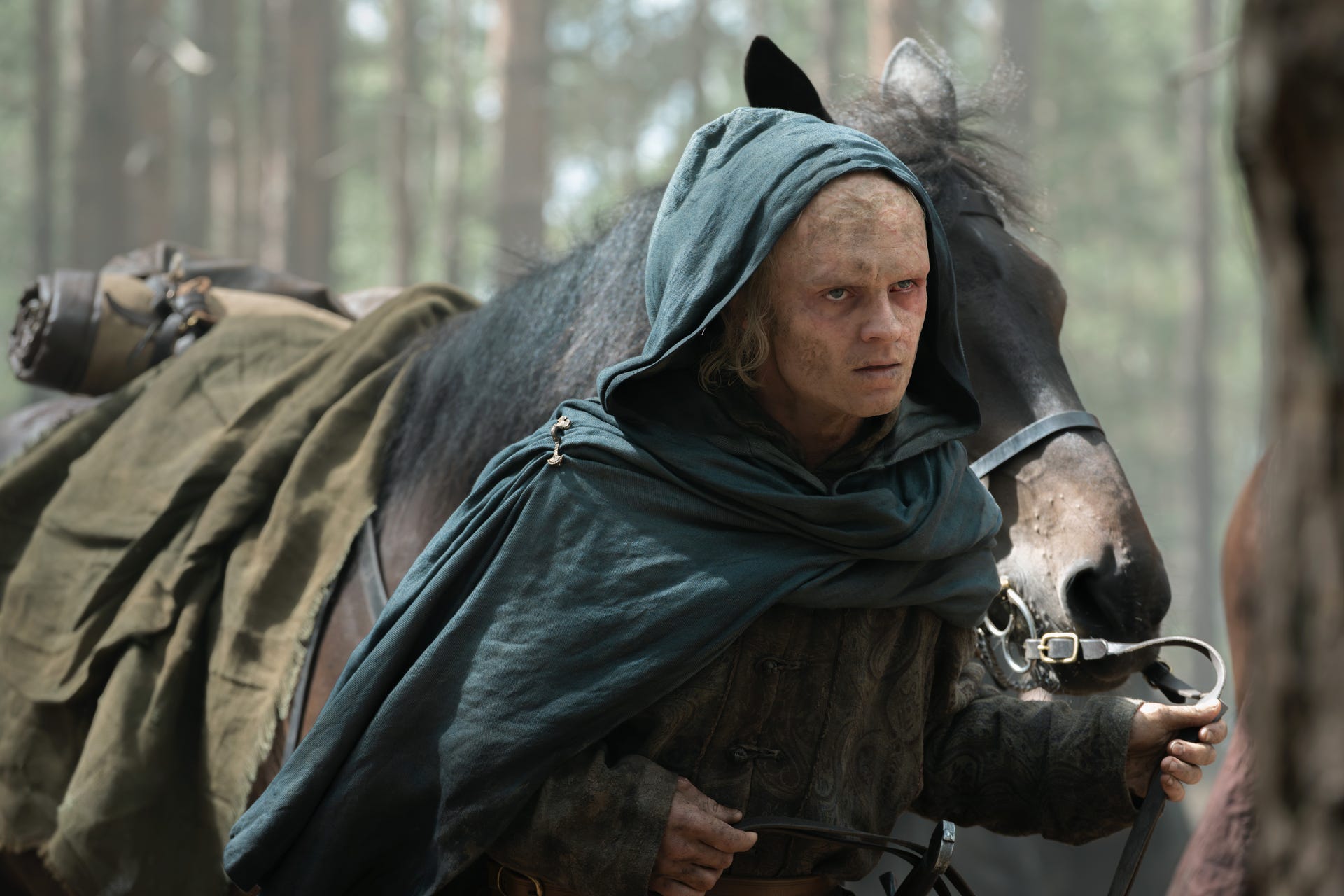
Something the Westeros franchise has always been known for is the way it pulls you in. From the now iconic opening music by Ramin Djawadi – where this season’s title sequence shows stylized blood slowly flowing over and staining a massive tapestry depicting the civil war – to vast landscapes, dragons set against sweeping horizons, and down to the smallest details in costumes, heraldry, and the ornamentation on swords and armor.
The visual effects have received yet another upgrade from an already impressive baseline. The dragons, created by a range of leading VFX studios, feel more present than ever this season. Digitally created creatures can often appear weightless and unconvincing – something even the biggest blockbusters can struggle with – but here they carry a weight and presence that is genuinely difficult to achieve, something that comes through most powerfully in the scenes between Matt Smith and the dragon Caraxes, where the chemistry between actor and animated creature is more convincing than you might ever expect.
For me, House of the Dragon is in many ways what Game of Thrones should have been. One can of course debate exactly where Game of Thrones lost its way – and opinions on that are divided, to put it mildly. But part of that conversation must include the fact that showrunners David Benioff and D.B. Weiss – who have since proved their worth with the superb 3 Body Problem on Netflix – ran into a rather unusual problem: they made the show faster than George R.R. Martin could write the books. And that is asking for trouble.
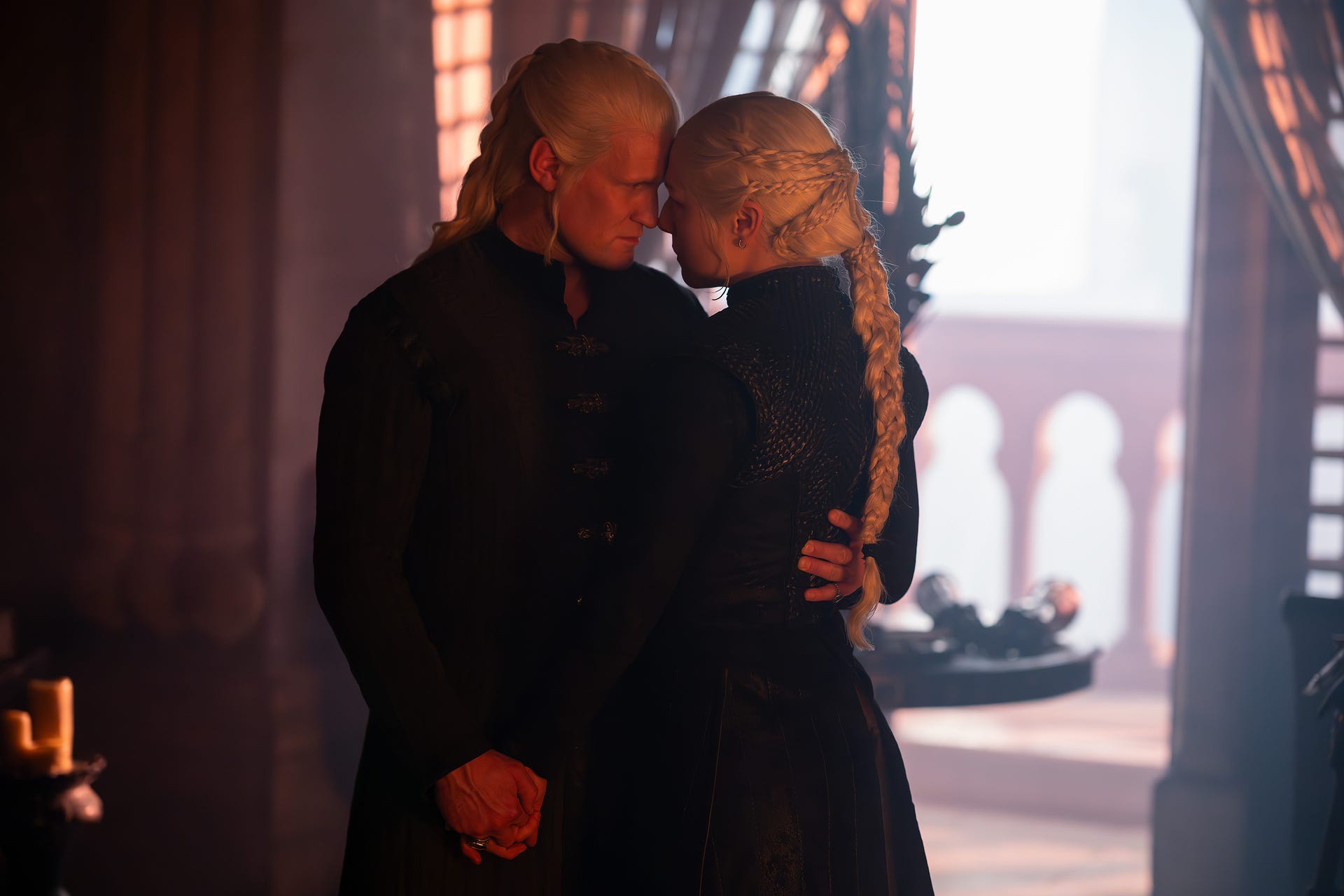
With House of the Dragon, there is no such challenge. Showrunner Ryan Condal knows where he is taking the series, and that gives it something every good story needs from the outset: a beginning and an end. The storytelling feels far more deliberate and intentional – especially in this third season, with an opening episode that works, in many ways, as a “good things come to those who wait” moment for everyone who walked away slightly disappointed after season 2.
There are no Joffreys here with their cartoonish villainy. No obvious heroes. Just people corrupted by power – or as Lord Acton once put it: “Power tends to corrupt, and absolute power corrupts absolutely.”
House of the Dragon takes us to Westeros in all its brutal splendor. And yes, it flies – literally – far higher than Game of Thrones ever did.
This review was originally published in Norwegian at Legendarium.no, where I gave it a rating of 5 out of 6. It has been translated to English with the help of AI-assisted translating software.