
Review: 'War Machine'
An exciting premise gradually turns into a montage‑driven advertisement for the U.S. armed forces

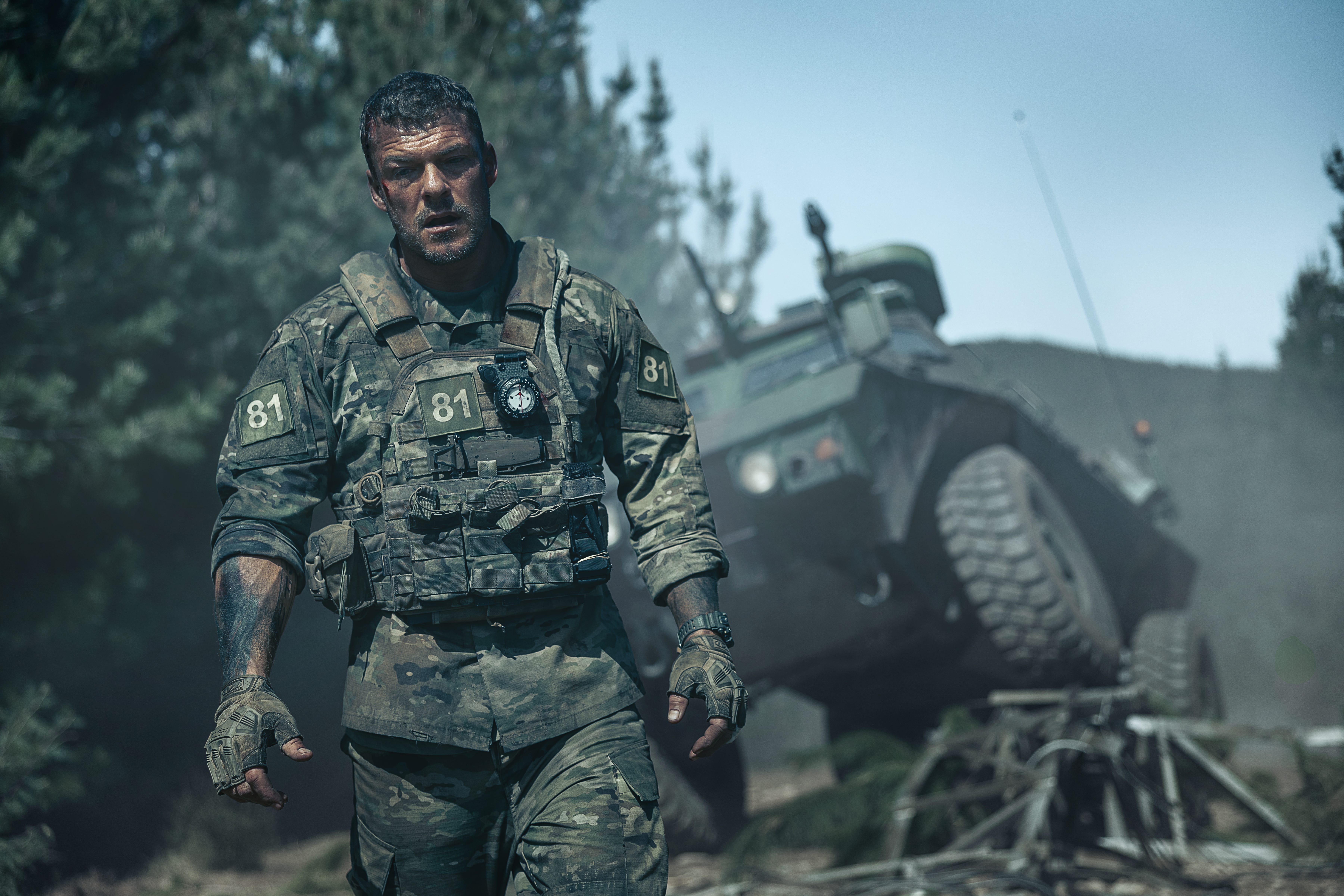
Alan Ritchson is on the rise. After breaking through as the imposing lead in Reacher, now three seasons strong, the 43‑year‑old American actor has established himself as a reliable presence in modern action entertainment. What makes Ritchson compelling is not just his physicality. Beneath the brute‑force archetype he often plays, there is usually a hint of vulnerability and, if you look closely enough, a genuine sense of humanity.
Reacher paved the way for other roles, mostly in action fare. One of the more enjoyable examples is Guy Ritchie’s underappreciated and gleefully irreverent The Ministry of Ungentlemanly Warfare (2024), where Ritchson appeared alongside Henry Cavill and Eiza González.
The actor has also spoken openly about his struggles with bipolar disorder, something that perhaps explains the vulnerability that occasionally shines through in his otherwise hyper‑masculine screen presence.
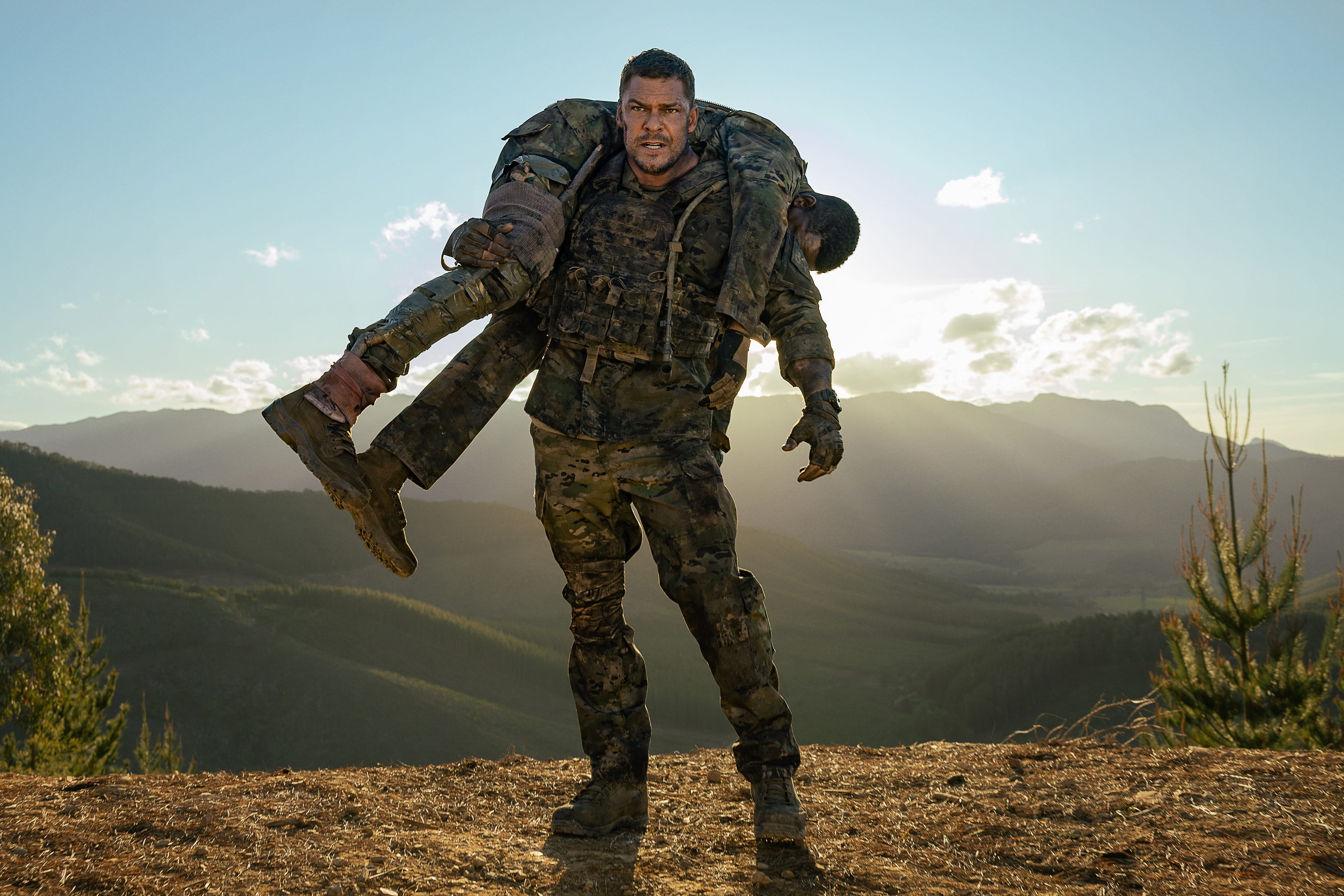
Netflix’s War Machine, then, sounds like something right up his alley. A military science fiction action film that promises to pit gung‑ho soldiers in combat gear against an unknown mechanical menace, more specifically a giant alien robot armed to the gills with lasers, missiles, bombs, and more. On paper, this is exactly the kind of premise where Ritchson should thrive, leaning fully into his on‑screen persona as a modern action leading man.
Which makes it all the more unfortunate that while the premise of War Machine is perfectly suited for a Friday‑night popcorn spectacle, the film gradually turns into something else entirely. That approach may play well with its obvious target demographic, American military enthusiasts, but it is likely to feel far less compelling elsewhere. That said, I will freely admit one thing: I do love me a giant robot with guns. But let’s dig a little deeper.
War Machine begins in the deserts of Afghanistan, where a squad of military engineers, led by our hero, later known only as 81 (Alan Ritchson), meets up with a stranded group of soldiers and their Humvees, commanded by 81’s brother (Jai Courtney).
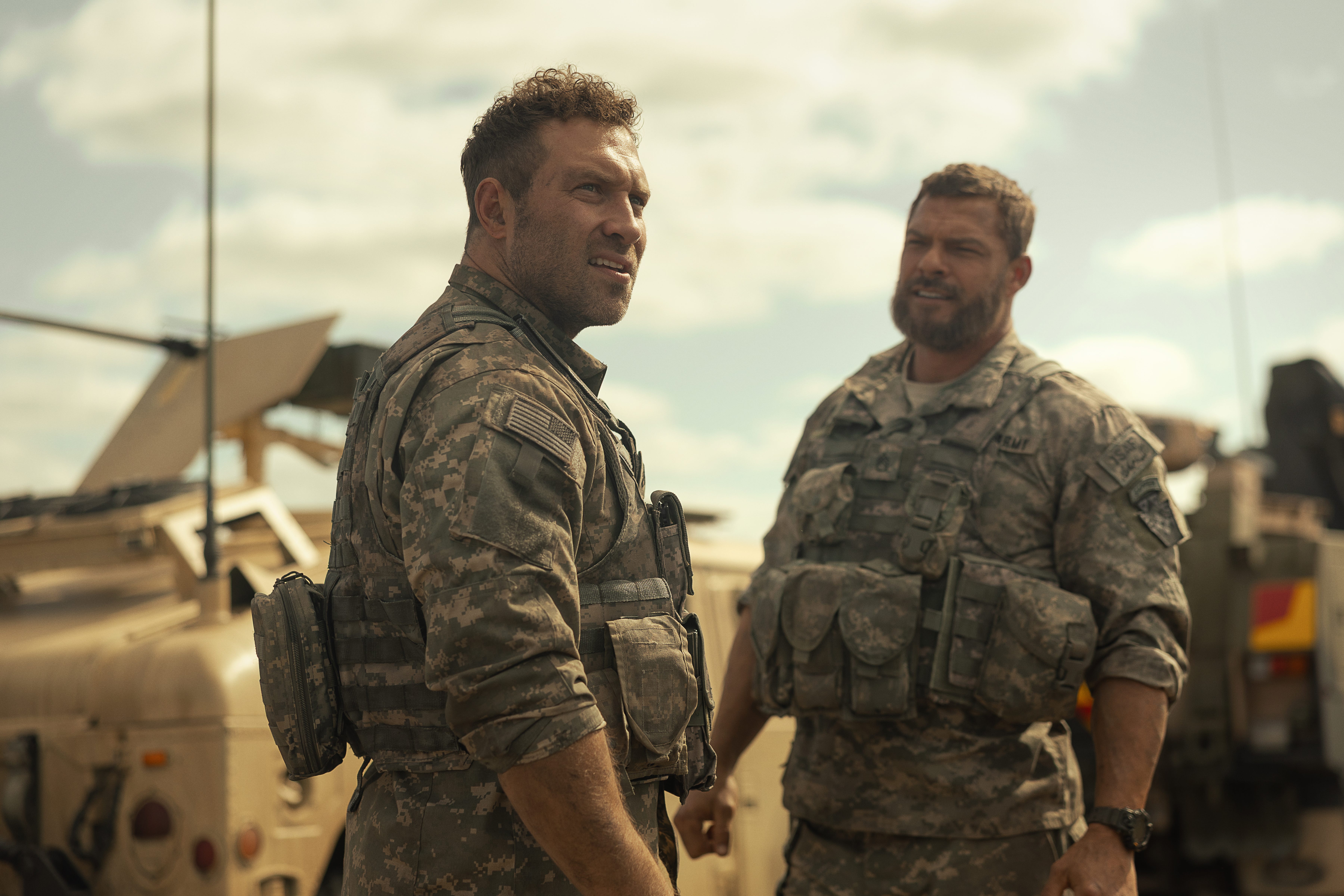
After some severely masculine bravado, with everyone talking in booming voices while flexing military tattoos and getting their hands dirty, the group is suddenly ambushed by unseen Taliban fighters. 81 is the only survivor, but not before carrying his dying brother on his shoulders back to base.
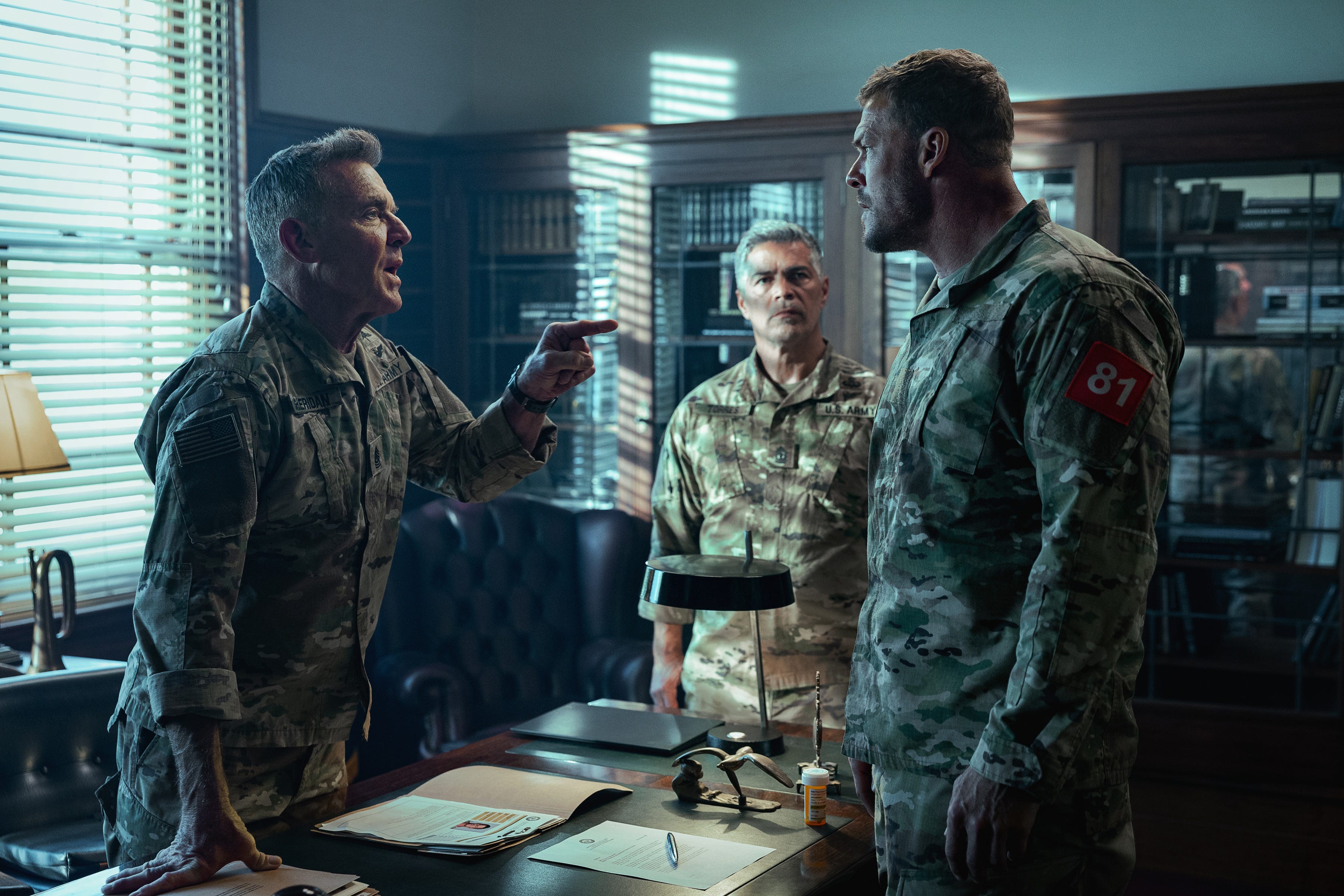
Two years later, 81 has signed up for Ranger training in Colorado, as in the guys who constantly seem to shout “Rangers lead the way… all the way!” The program is overseen by the grumpy officer Torres (Esai Morales) and the slightly manic‑looking commanding officer Sheridan (a somewhat crazy-eyed Dennis Quaid). After a gruelling and overly long montage‑driven training sequence, most aspiring Rangers are weeded out, leaving only the (un)lucky few for the final “Death March” exercise.
And I cannot stress enough how painfully cliché much of this setup feels. I am obviously not a military man, and one hopes that director Patrick Hughes (The Expendables 3, The Hitman’s Bodyguard), who wrote the film with James Beaufort, who also appears on screen as the character 23, has deliberately dialed up the bravado and the banter for cinematic effect.
That is not to say the film is entirely painful to watch. It isn’t. In fact, if you can look past the gung‑ho bluster, Alan Ritchson presents a compelling, if somewhat archetypal character: the wounded veteran with PTSD, vulnerable beneath a thin veneer of heroism, determined to finish Ranger training in honor of his fallen brother.
The focus of the film is the so‑called “Death March,” a final test where the remaining Rangers-in-training must head into the wilderness to complete a mission: destroy what they believe to be a crashed experimental military aircraft. Everything is, of course, pretend — rifles loaded with blanks, the opposing team, the so-called Cadre, consisting of other U.S. soldiers.
But when they reach the target, they quickly realize something is wrong. The wreckage looks nothing like a conventional aircraft. A high‑tech armored hull, with no wings in sight, lies embedded in the soil. When the soldiers plant their charges, the explosion results in something entirely unexpected: a very angry alien robot that immediately proceeds to decimate the troop.
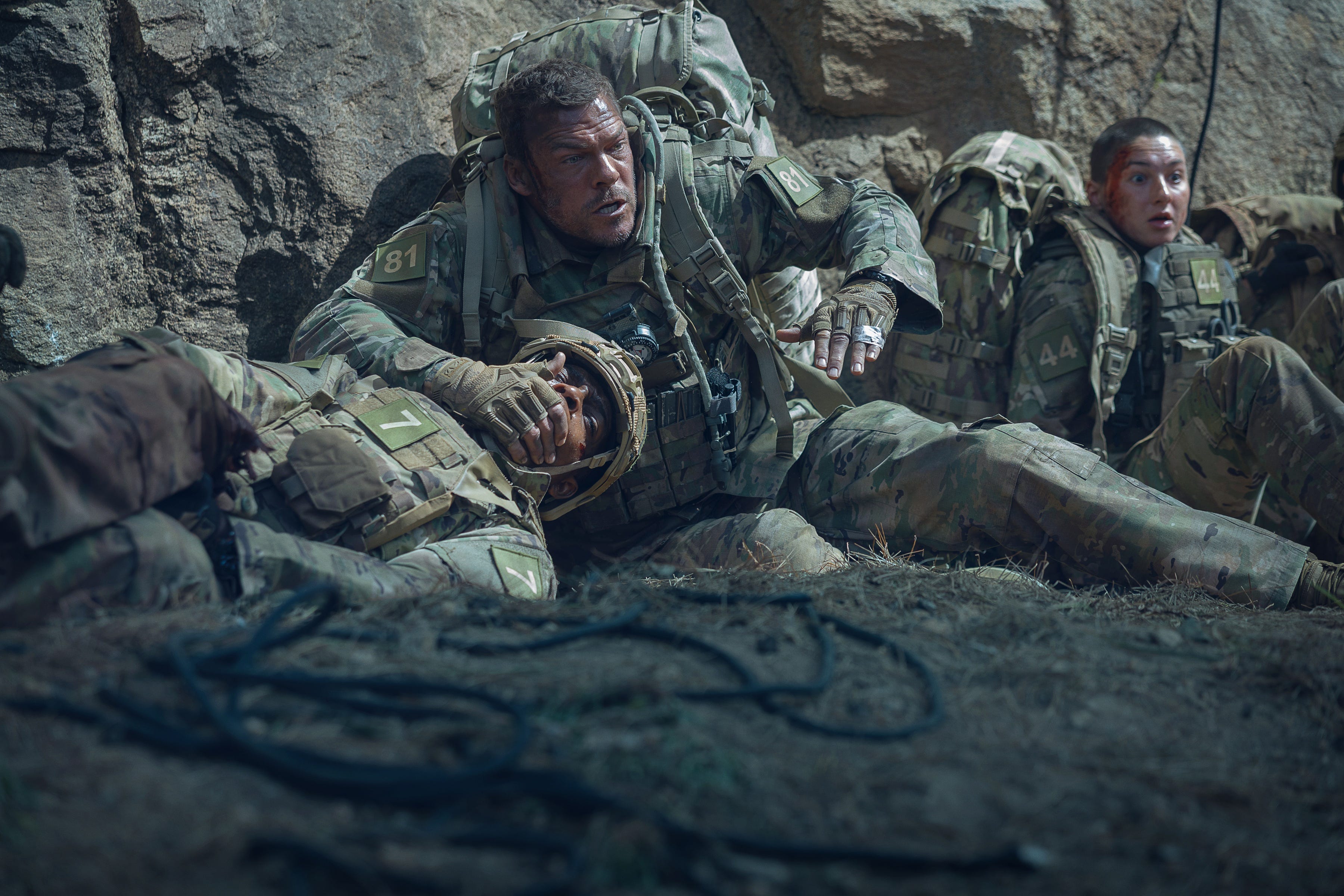
The survivors of the attack, now hunted by the massive machine, must navigate the wilderness back toward their training base. At this stage the film effectively becomes a variation of the Predator (1987), with the remaining soldiers picked off one by one by an ever‑present alien menace.
It is not a particularly flattering look for the film to echo something so iconic quite this blatantly, and while Alan Ritchson does his best with the material he is given, the story, or what remains of it, begins to spiral during this middle stretch.
Let’s be honest: however compelling Alan Ritchson’s character 81 might be, at least within the limits of the genre, most viewers are here for the giant mechanical menace. On that front the film mostly delivers. The alien robot looks suitably imposing, even if its movements are sometimes a little slow and cumbersome, giving off a faint War of the Worlds energy, more in sound design and menace than in appearance.
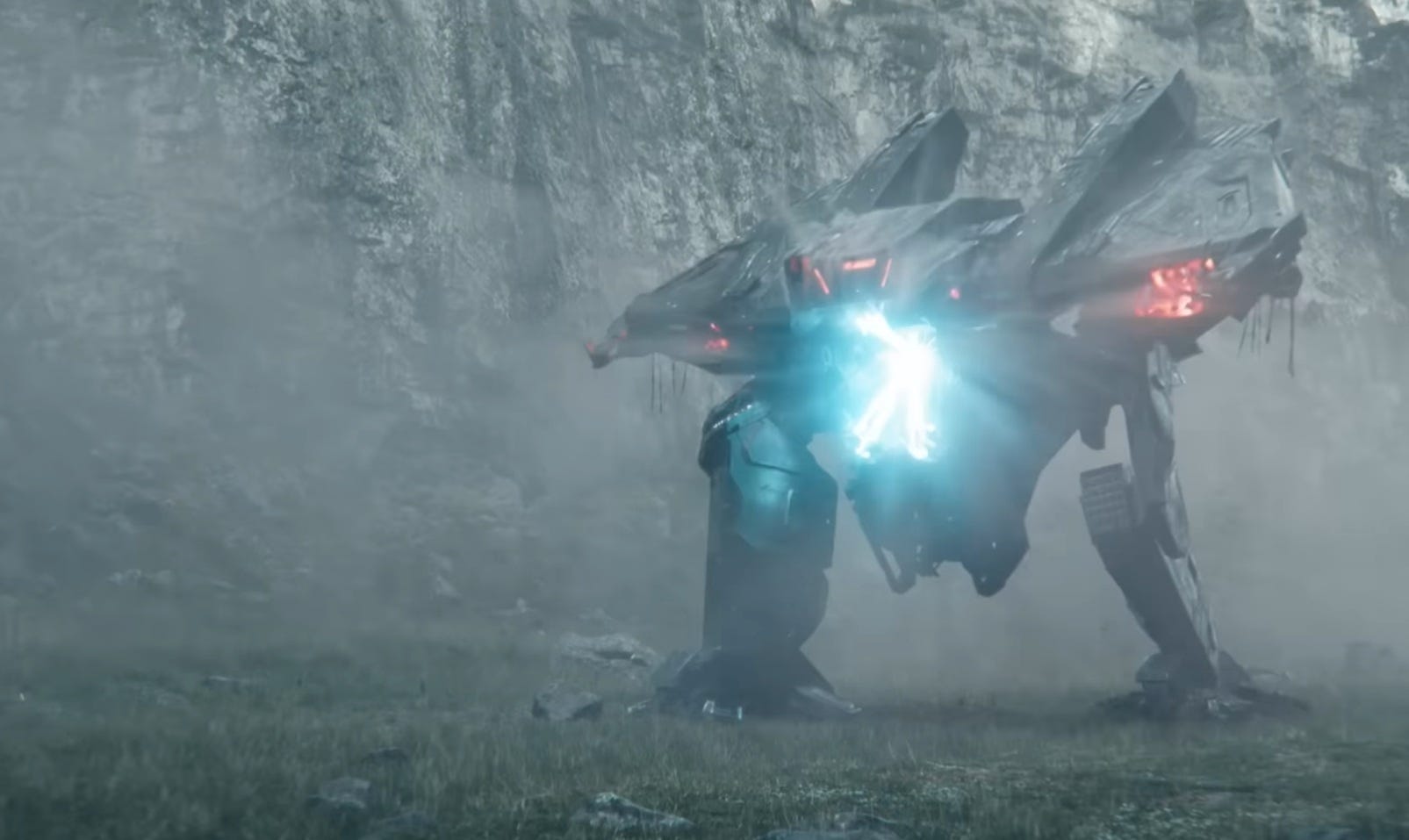
When it clashes with the soldiers the film occasionally finds a rhythm, particularly in a tense river crossing and a chase involving an armored vehicle, staged as a slick, if somewhat CG-heavy, one‑shot.
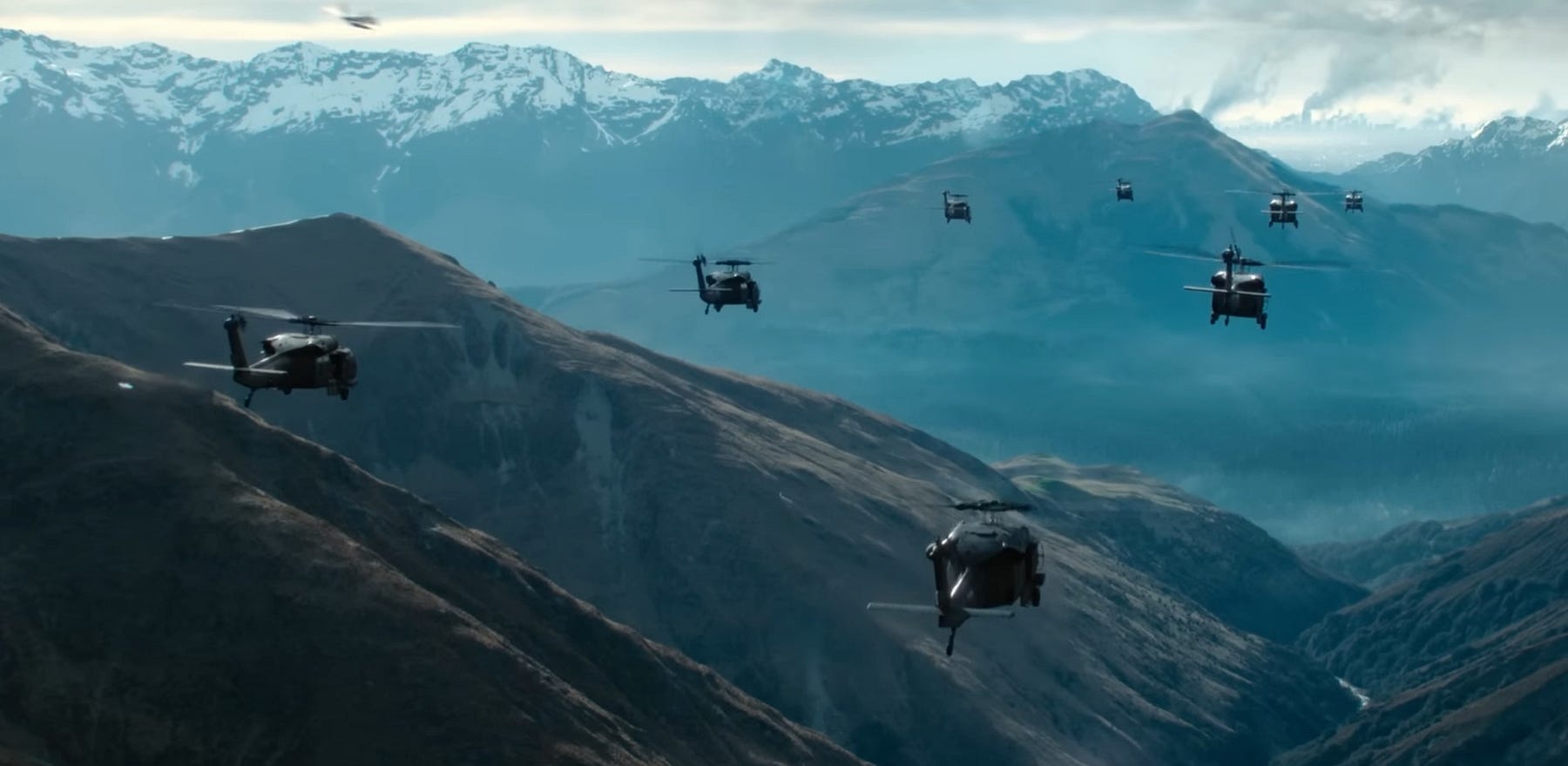
But as the final act begins, the film’s true ambitions begin to reveal themselves. What initially felt like a rough‑and‑ready military sci‑fi survival story gradually transforms into something else entirely: a glossy recruitment video for the United States Army, complete with slow‑motion hero shots, flags rippling majestically in the wind, and roaring Black Hawk helicopters loaded with stoic and patriotic American solider.
By the time the inevitable rallying cries return, “Rangers lead the way!” followed, naturally, by the equally enthusiastic response, “All the way!”, the film has fully embraced its inner propaganda reel. At this point one half expects the credits to pause briefly so a recruitment officer can step into frame and hand out pamphlets.
Despite a few good action sequences, to this Norwegian critic, especially in this day and age, the end result lands somewhere between awkwardness and cringe.
War Machine premieres on Netflix on March 6th.
https://www.youtube.com/watch?v=GlhcBW5Ud_c