
Review: 'The Mandalorian and Grogu'
Din Djarin and Grogu battle rogue imperials and greedy Hutts in a Star Wars adventure that pushes all the fandom buttons

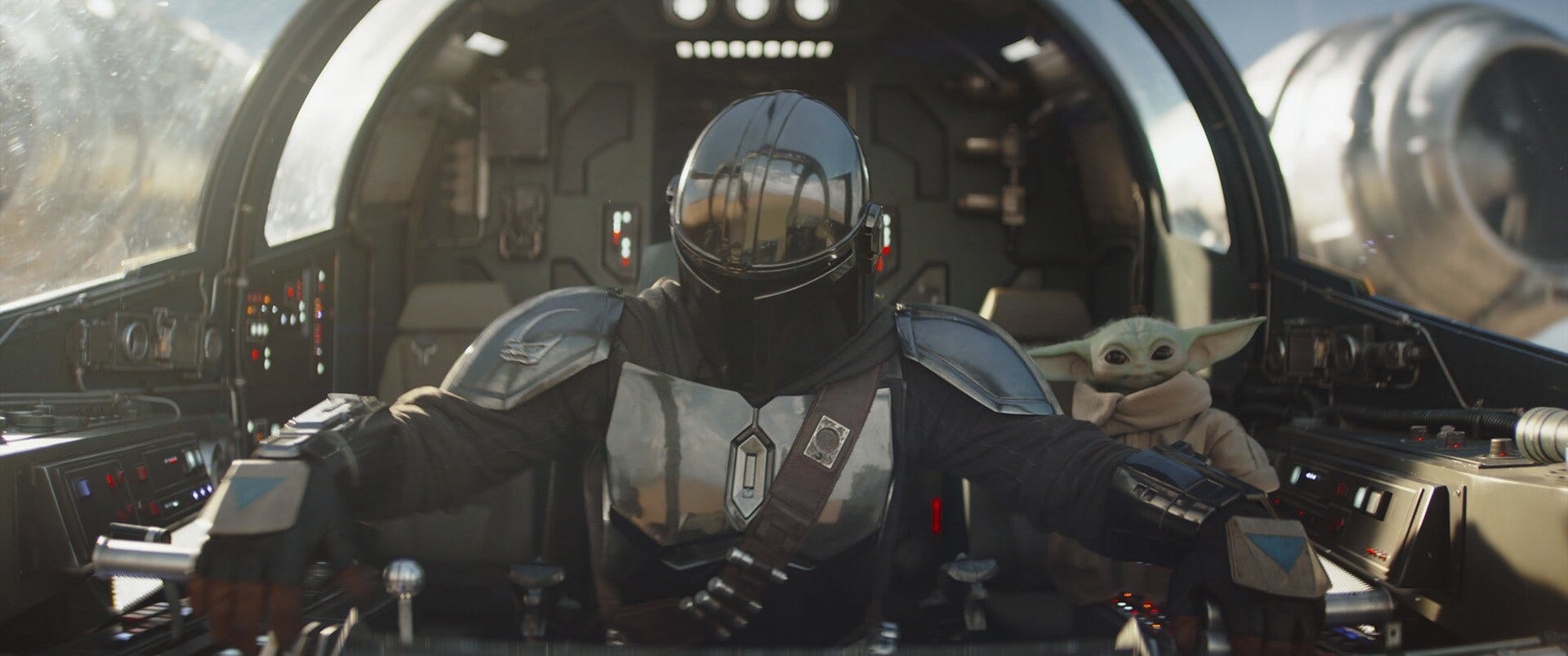
We may be hearing it and reading it everywhere, but it still feels slightly surreal: after seven years, Star Wars has finally returned to the big screen with The Mandalorian and Grogu.
The much-debated Star Wars Episode IX: The Rise of Skywalker arrived all the way back in 2019, and since then, Lucasfilm and Disney have largely focused on streaming rather than cinemas.
In the years since, we’ve seen a wave of live-action spin-off series set in George Lucas’ iconic galaxy, alongside strong animated shows continuing the legacy of The Clone Wars and Rebels. Much like the final chapter of the Skywalker saga, these projects have sparked joy and excitement, but also heated debate, outright arguments, and, in some unfortunate cases, direct harassment.
If there is one thing we might actually agree on (a rare event among Star Wars fans), it’s that the Disney+ era has hardly lacked variety.
Want a serious espionage thriller? The brilliant Andor delivers. More into kung fu, wuxia, and Jedi philosophy? Then the underrated The Acolyte deserves another chance, regardless of what the loudest professionally angry fans on YouTube might tell you.
Looking for classic 1980s adventure energy, with kids on the run from space pirates? Skeleton Crew. A more mythic, almost spiritual Star Wars experience? Ahsoka. A reunion with old heroes? Obi-Wan Kenobi and The Book of Boba Fett.
But the first live-action series out of the gate was The Mandalorian, which premiered in 2019 alongside the launch of Disney+.
It was something many Star Wars fans had wanted for years, especially after the long-running rumours about George Lucas’ abandoned live-action series exploring the galaxy’s criminal underworld, a project that never came to fruition.
Still, some of those ideas clearly lived on elsewhere. Traces of them appeared in novels, comics, and even the cancelled game project Star Wars 1313.
The Mandalorian, which blends Star Wars with a healthy dose of western mythology and samurai storytelling, works so well because it offers something both fresh and familiar, drawing heavily from the legacy of fan-favourite Boba Fett.
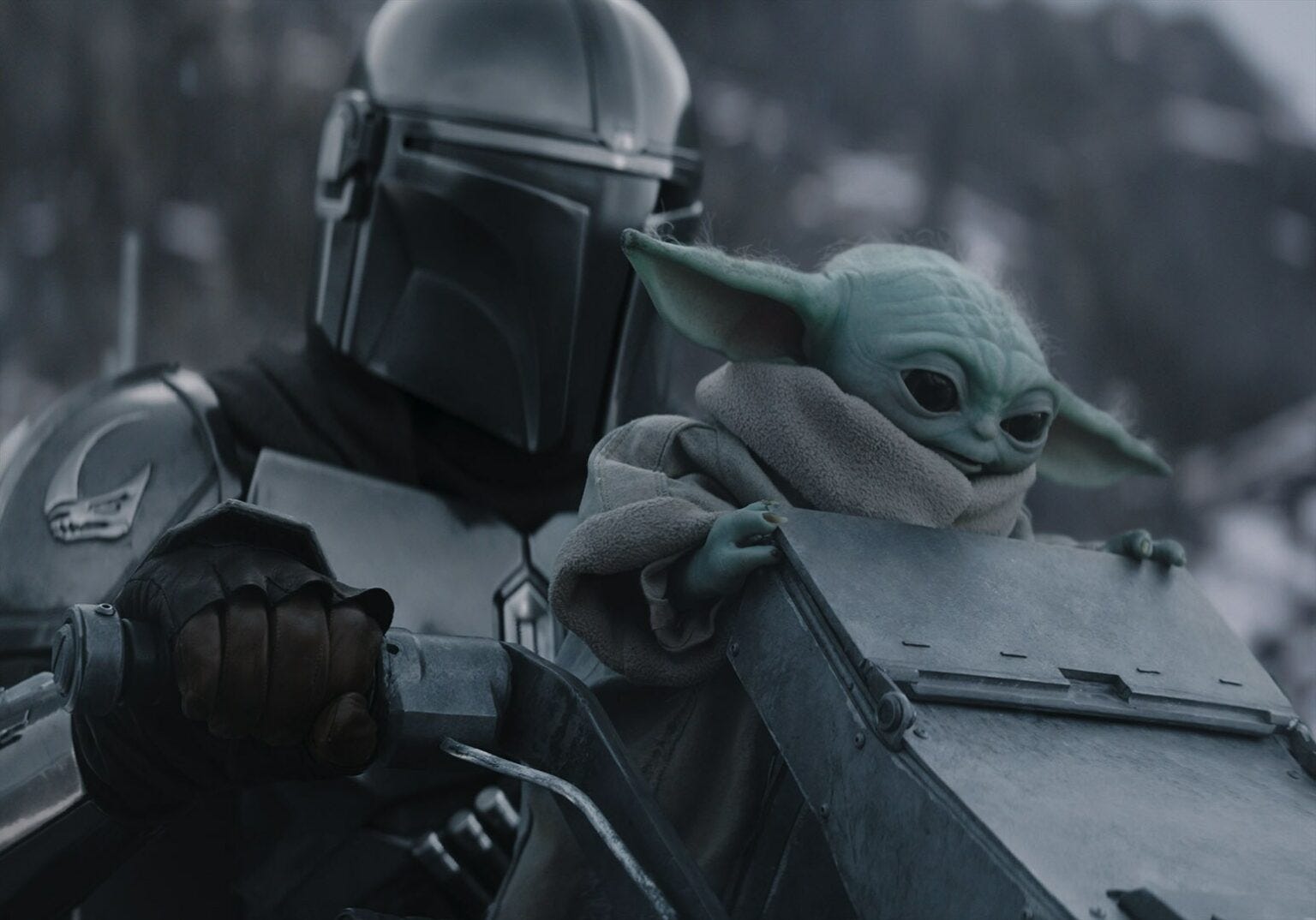
Here we meet the ice-cold bounty hunter Din Djarin (Pedro Pascal), adopted into the Mandalorian sect Death Watch after his parents were killed during the Clone Wars.
When Imperial loyalists hire him to retrieve a target, Grogu, a child with powerful Force abilities, things quickly go in a very different direction. Din Djarin’s conscience overrides duty, and soon the pair are on the run from both the bounty hunters’ guild and the Empire in an adventure that feels lifted straight from Kazuo Koike’s Lone Wolf and Cub.
What began as a surprisingly fresh Star Wars concept quickly became the flagship of Disney’s streaming strategy, and across three seasons, Din Djarin and Grogu have become two of the most beloved characters of the modern Star Wars era. It also feels entirely fitting that The Mandalorian, which launched Disney’s live-action Star Wars expansion, is now the project leading the franchise back into cinemas.
Now The Mandalorian and Grogu has arrived.
When we reunite with the iconic duo after the events of season three, they’ve settled into a familiar rhythm. Leaders and remnants of the now mostly defeated Empire are still on the run, while the former Rebel Alliance, now the New Republic, is doing everything it can to hunt them down before they can gather enough strength to start another war.
Din Djarin and Grogu are working freelance for a New Republic unit led by Ward (Sigourney Weaver), tasked with tracking down a mysterious warlord that little is known about, aside from what the Hutts are willing to share. And as we all know, nothing comes free when dealing with them.
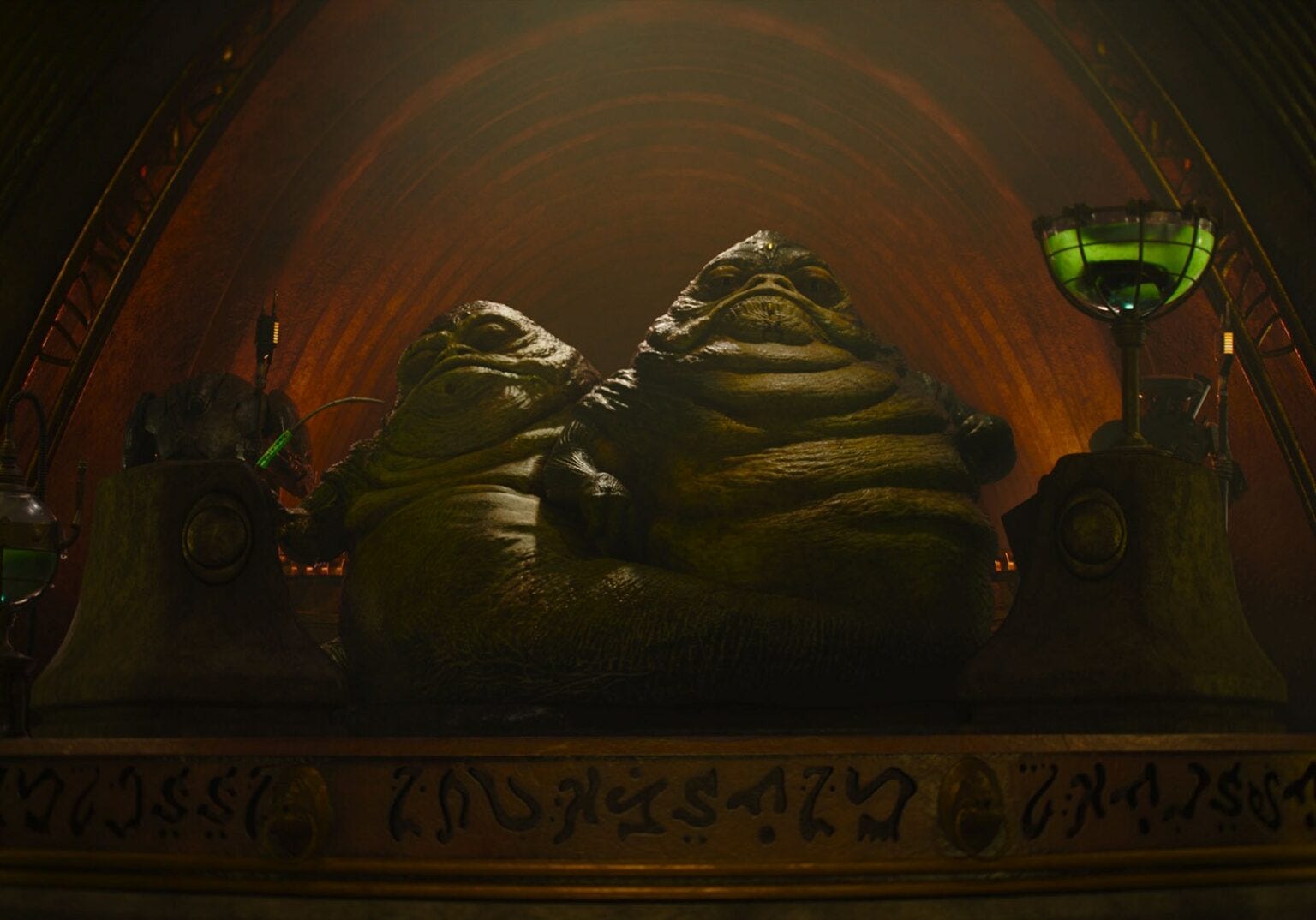
Together with Garazeb “Zeb” Orrelios (Steve Blum), familiar to fans of Star Wars Rebels, they are sent to Nal Hutta to negotiate and locate Jabba the Hutt’s missing heir, Rotta (Jeremy Allen White).
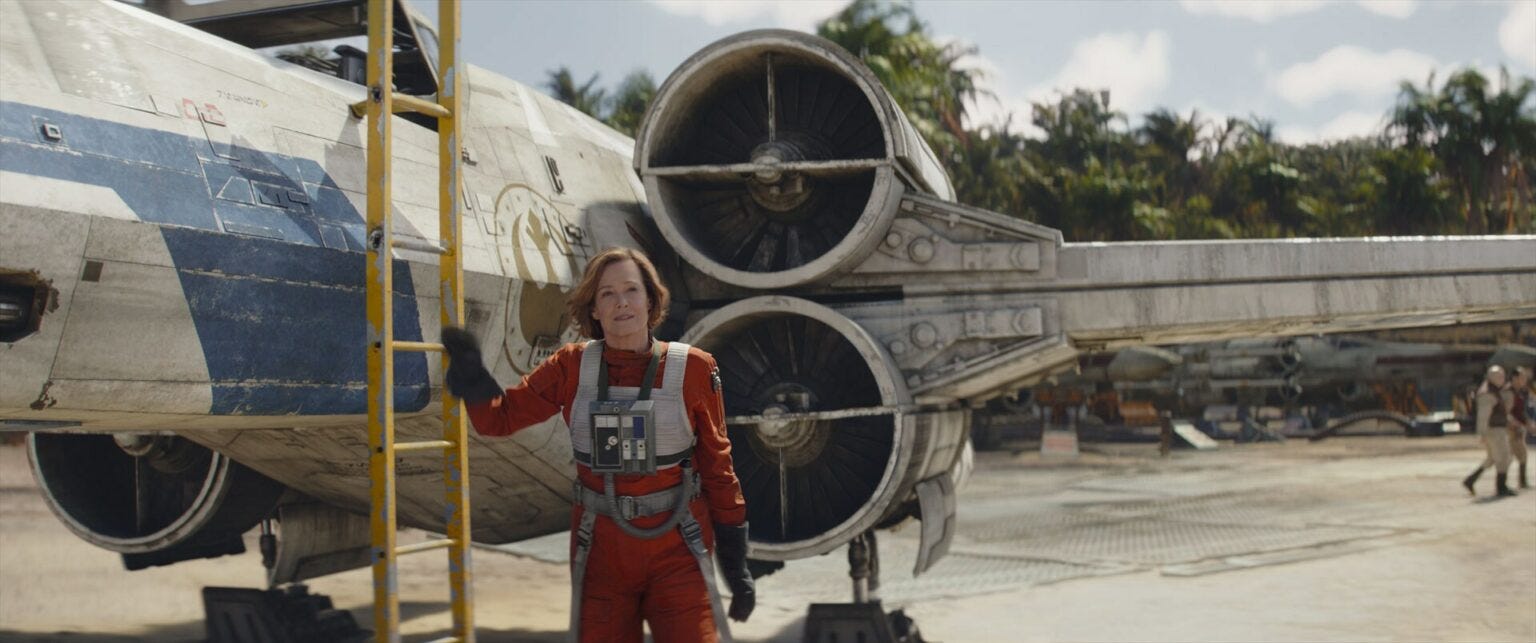
This is where director Jon Favreau’s latest Star Wars story begins.
Favreau, who also created The Mandalorian, co-wrote the screenplay with Dave Filoni, George Lucas’ former protégé and now effectively heir to the creative throne at Lucasfilm. Joining them is Noah Kloor, who also worked on both The Mandalorian and The Book of Boba Fett.
This is a team that clearly understands what Star Wars is supposed to be. While the result feels unmistakably like The Mandalorian, it is also large enough to fill even the biggest cinema screen.
Because that was my biggest concern going in: would this simply feel like an extended two-hour special episode of The Mandalorian?
Thankfully, the answer is no.
This feels like cinematic Star Wars, not television with a larger budget. Just as importantly, the story of Din Djarin and Grogu receives meaningful progression after the three seasons of the Disney+ series.
It is obvious that Favreau, Filoni, and Kloor were aiming for something more classical. This is a traditional, almost retro action-adventure made for the big screen.
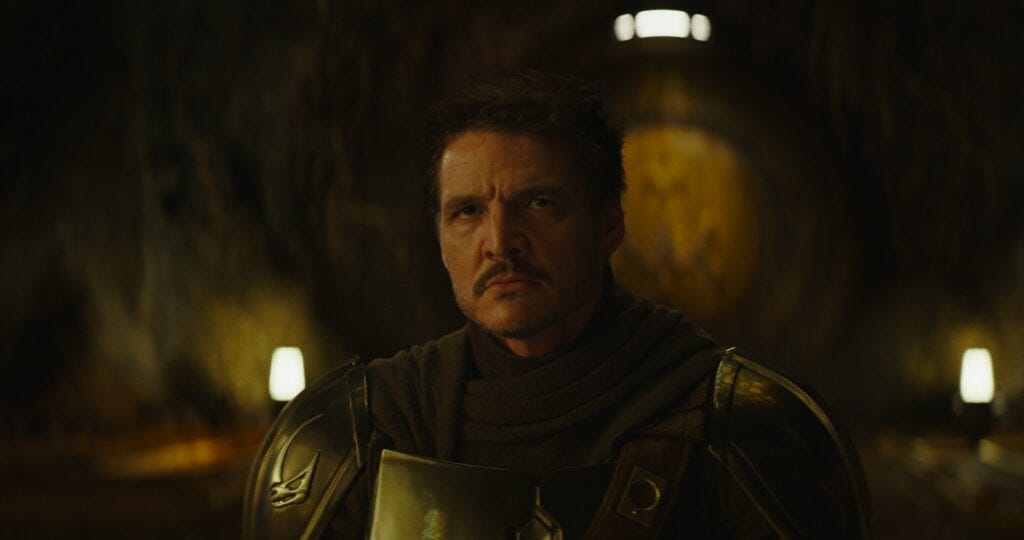
Favreau and Filoni have spoken openly about how The Mandalorian and Grogu, as part of the so-called Filoni-verse, functions as a more straightforward action-adventure, while the upcoming second season of Ahsoka continues exploring the more esoteric and mythological corners of the Star Wars universe.
It should also be said that The Mandalorian and Grogu is first and foremost a film made for Star Wars fans.
Like the rest of the Filoni-verse, it is packed with references, connections, and little rewards for those who have kept up, often reaching all the way back to The Clone Wars and Rebels.
Rotta the Hutt, played by Jeremy Allen White, plays a central role in this story, but actually first appeared in the 2008 theatrical The Clone Wars film. The same goes for bounty hunter Embo, a clear fan favourite from The Clone Wars, originally voiced by none other than Dave Filoni himself.
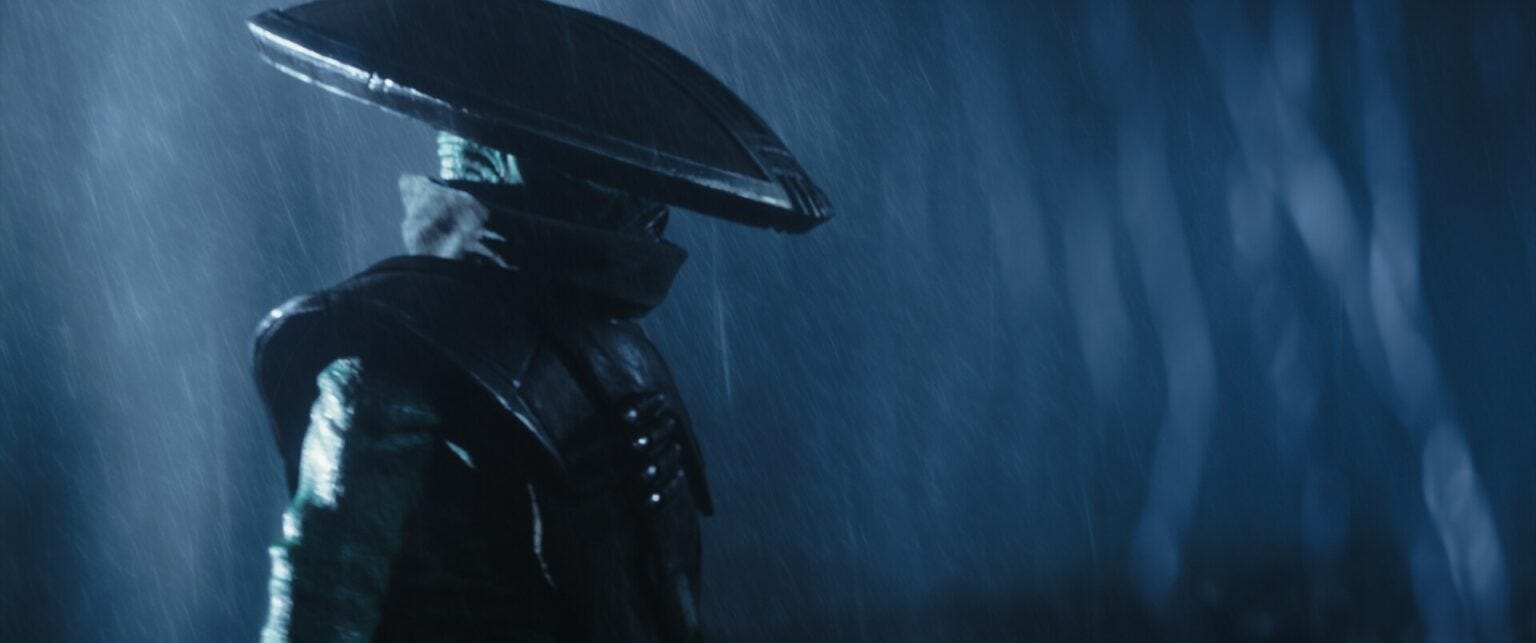
A lot of this is, of course, blatant fan service, which is not always a good thing. But when it works, as it does here, even hardened Star Wars fans will be grinning from ear to ear.
At the same time, it may create a bit of distance for more casual moviegoers who are not necessarily fluent in every obscure piece of galactic lore.
People talk fast here, and strange terminology flies through the air. For longtime fans, this is just everyday vocabulary.
We know that Nar Shaddaa is Nal Hutta’s urban neighbouring moon, that the target cards Din Djarin uses originate from the card game Sabacc, and that the Razor Crest is a spaceship, not Gillette’s latest razor launch. Let’s just say I may never look at the Dejarik scene in the original Star Wars the same way again.
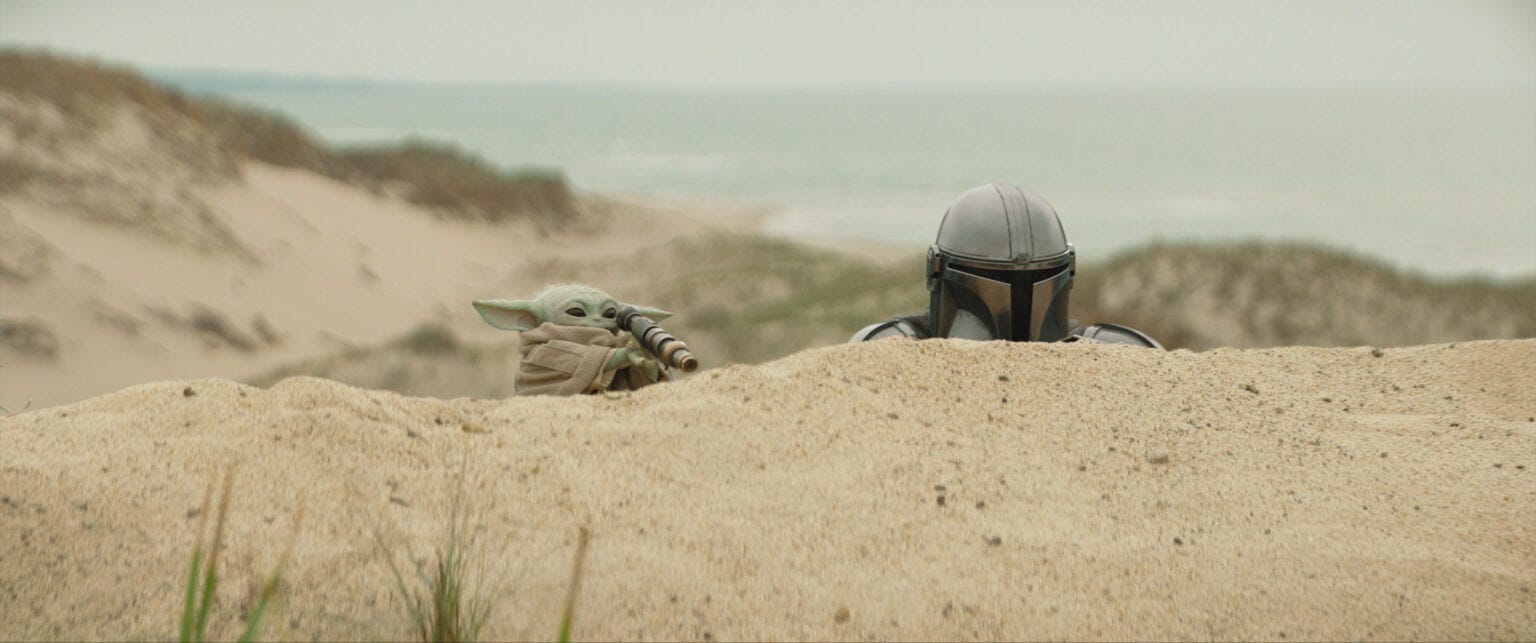
Combined with the film’s parade of planets and moons, from sun-drenched beaches to slimy caves populated by criminal giant slugs, I can easily imagine The Mandalorian and Grogu feeling especially nerdy, perhaps even slightly overwhelming, for anyone not already fully invested in Star Wars.
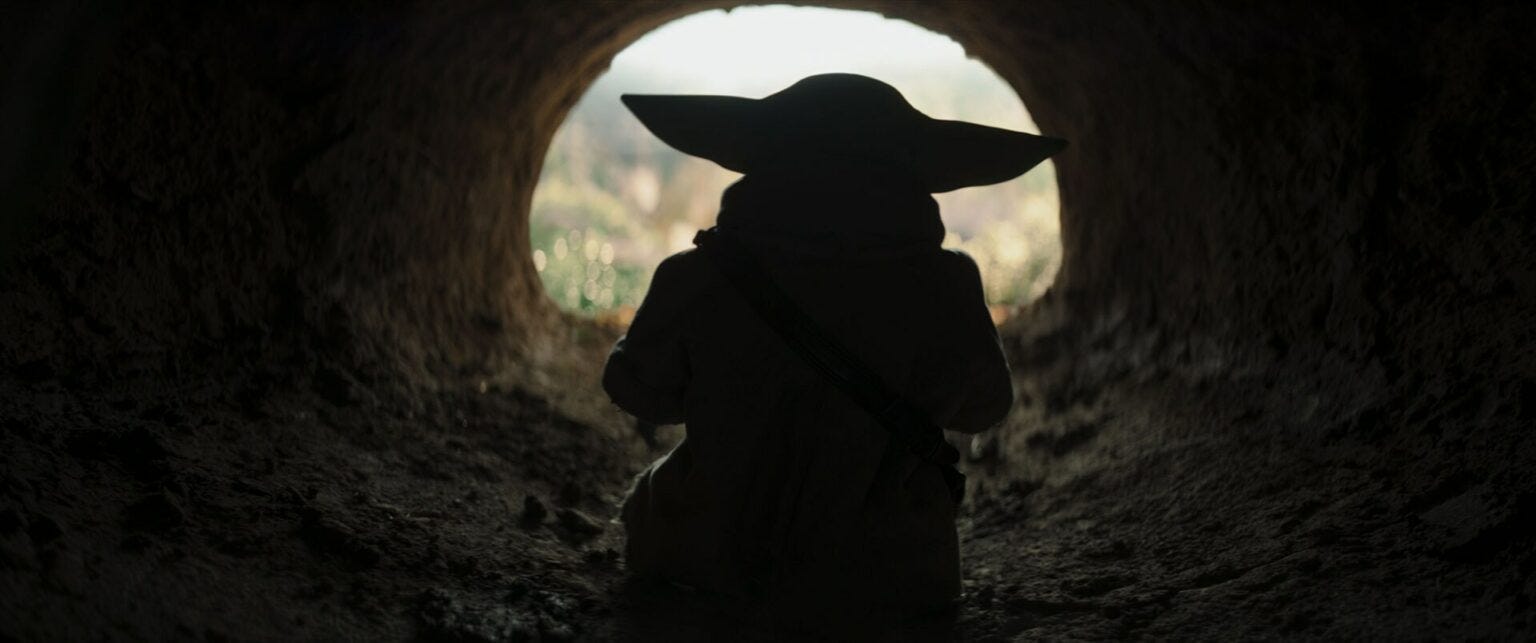
That said, The Mandalorian and Grogu is not just a excellent action-adventure. It is also a excellent Star Wars film, and a genuine gift to fans.
Everything is here: breathtaking planets, bizarre creatures, deliciously evil villains, heroic action sequences, and enough Filoni references to fill a space cruiser.
On top of that, there is Ludwig Göransson’s phenomenal score, which boldly takes Star Wars in fresh musical directions without losing its connection to John Williams’ legacy.
This film knows exactly what it is: fun, unpretentious, and occasionally just as chaotic and gloriously out of control as Grogu left alone in the cockpit of the Razor Crest.
And if there is one thing the Star Wars fandom desperately needs right now, it is the chance to come together around something they love, ideally in a dark cinema, sharing in the excitement and joy of the extraordinary adventure universe George Lucas created nearly 50 years ago.
I hope, no, I genuinely dare to believe, that The Mandalorian and Grogu will do exactly that.
Want to learn more about the Star Wars Fandom? Check Out this article:
