

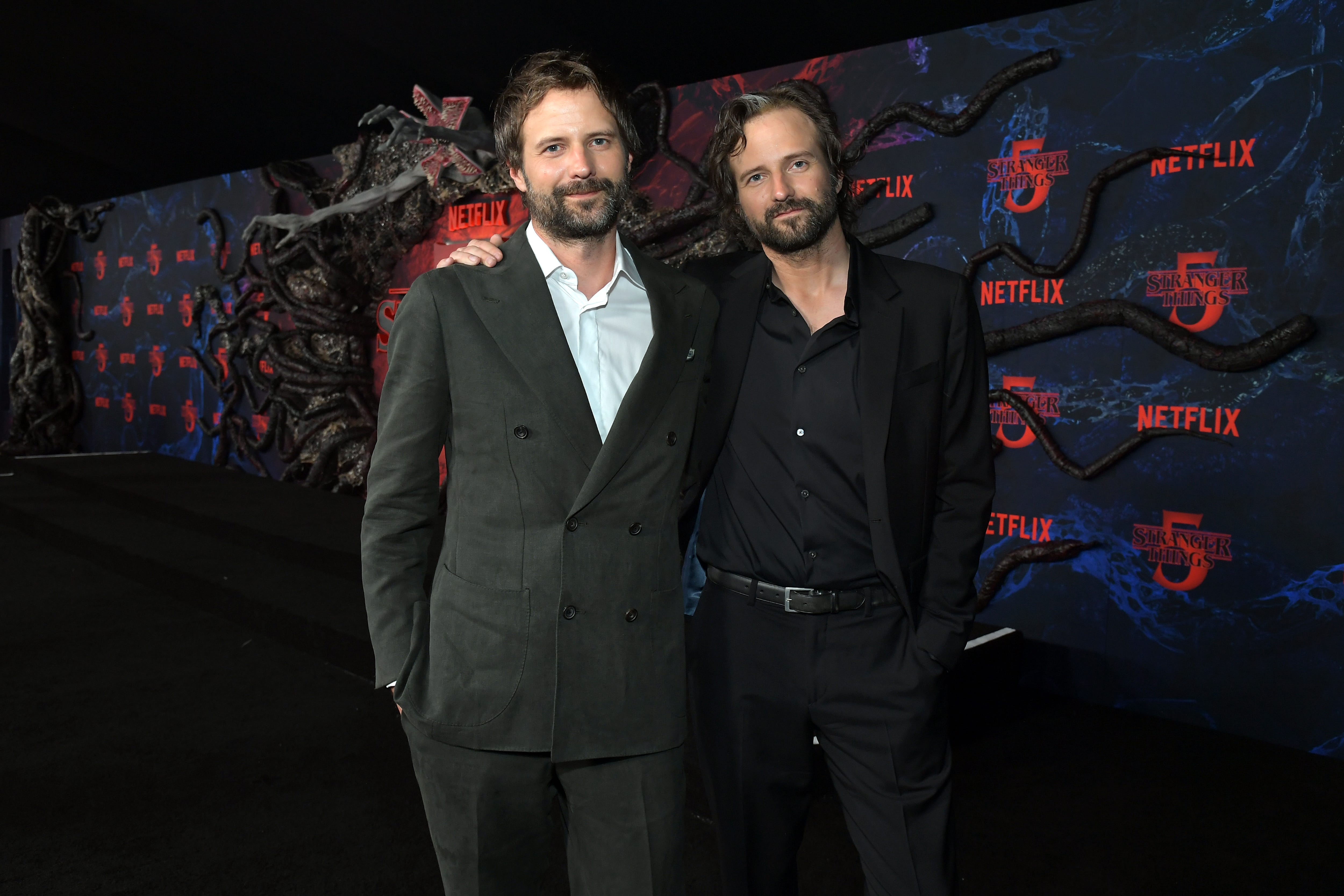
Stranger Things has never felt like a show that was built only to entertain. When Matt and Ross Duffer talk about the final season, they don’t reach for hype. They talk about process. It’s two brothers trying to land something that began as a coming-of-age story and grew into a full-scale genre universe, without losing the all-important human element that made it matter.
This article — the last of three — is based on the hybrid press conference I attended on November 8, 2025, featuring creators, writers, and executive producers Matt and Ross Duffer.
The World That Grew Up
Matt framed the entire evolution of the series in one sentence: “As big as the scale and digital effects have been, the core of the show, at the heart of it, is a coming-of-age story.” That’s the throughline, even as each season has shifted shape.
For them, reinvention wasn’t just creative ambition — it was survival. “Something that’s been important to Ross and I, as we continue to build up the show, is we’ve never wanted to repeat ourselves too much,” Matt said. “And part of that is just, you don’t want to get bored. Because if you’re bored, you’re gonna be making something boring, probably.”
He tied that mindset to the sequels they loved as kids. “We’re movie guys, so we like the idea of changing it and making it feel different, scaling up,” he said. “When we look back at the sequels that we loved the most when we were kids, mostly James Cameron sequels, they tended to evolve what came before it — but in a way that felt organic.” He pointed to two big ones. “So we looked at, obviously, Terminator 2 and Alien. He didn’t betray what those original films were, but he took them in a new direction.”
Revealing the Upside Down
Ross was direct. “We wanted to reveal everything this season,” he said. For years, the Upside Down has been a puzzle box — and they’ve deliberately held back.
It wasn’t improvised. It was mapped out. “We have a full document from season one going into great detail about exactly what the Upside Down is,” Ross said. “And we’ve talked about every season revealing it, but instead, we’ve just given hints.” But the clues have always been there: “Especially season four, that it was frozen in time.”
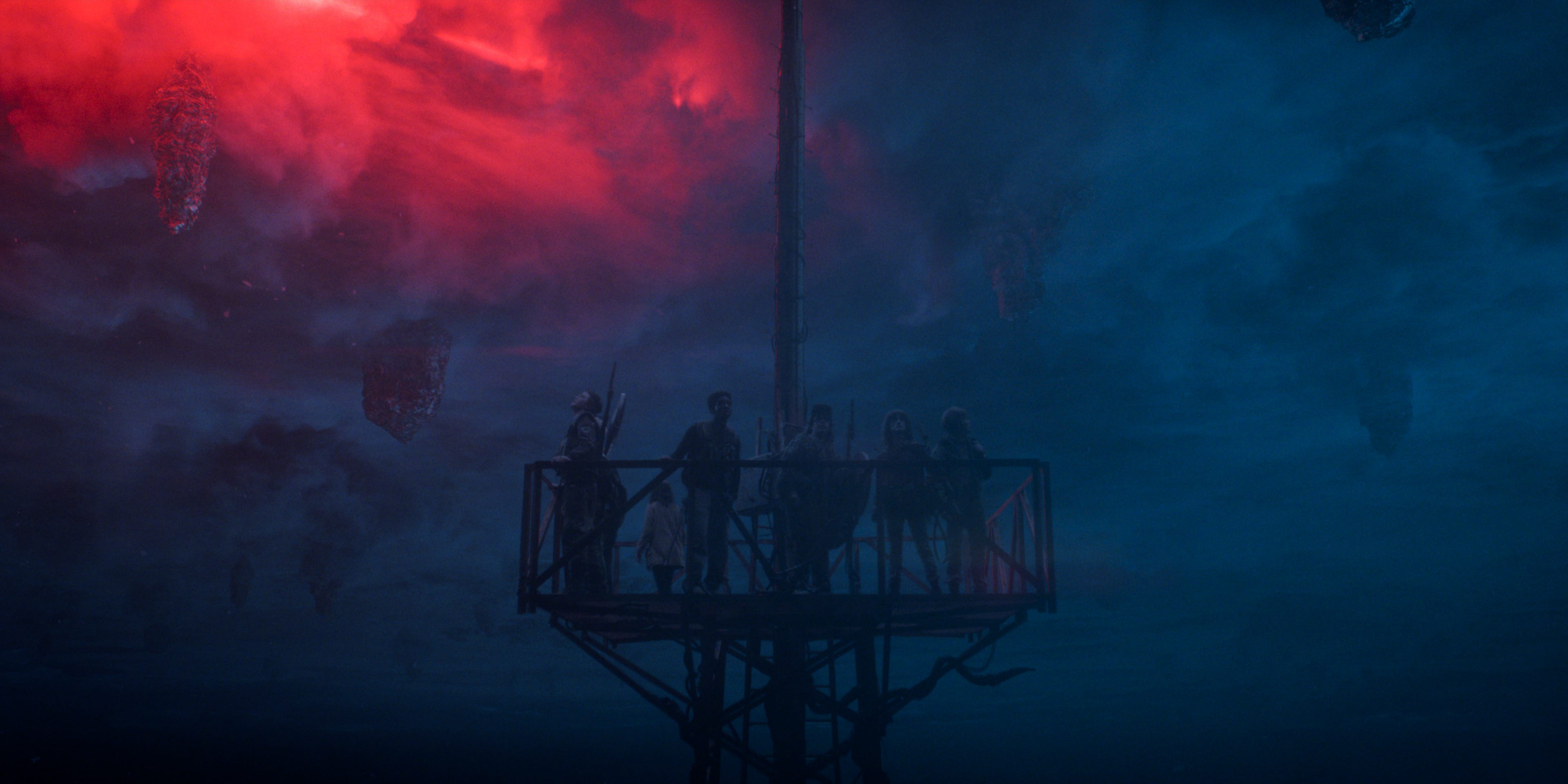
Season Five goes the rest of the way. “We explain that — and the vines, why it looks like Hawkins. All that gets explained this year,” Ross said. “It’s pretty crazy.”
Creating Vecna
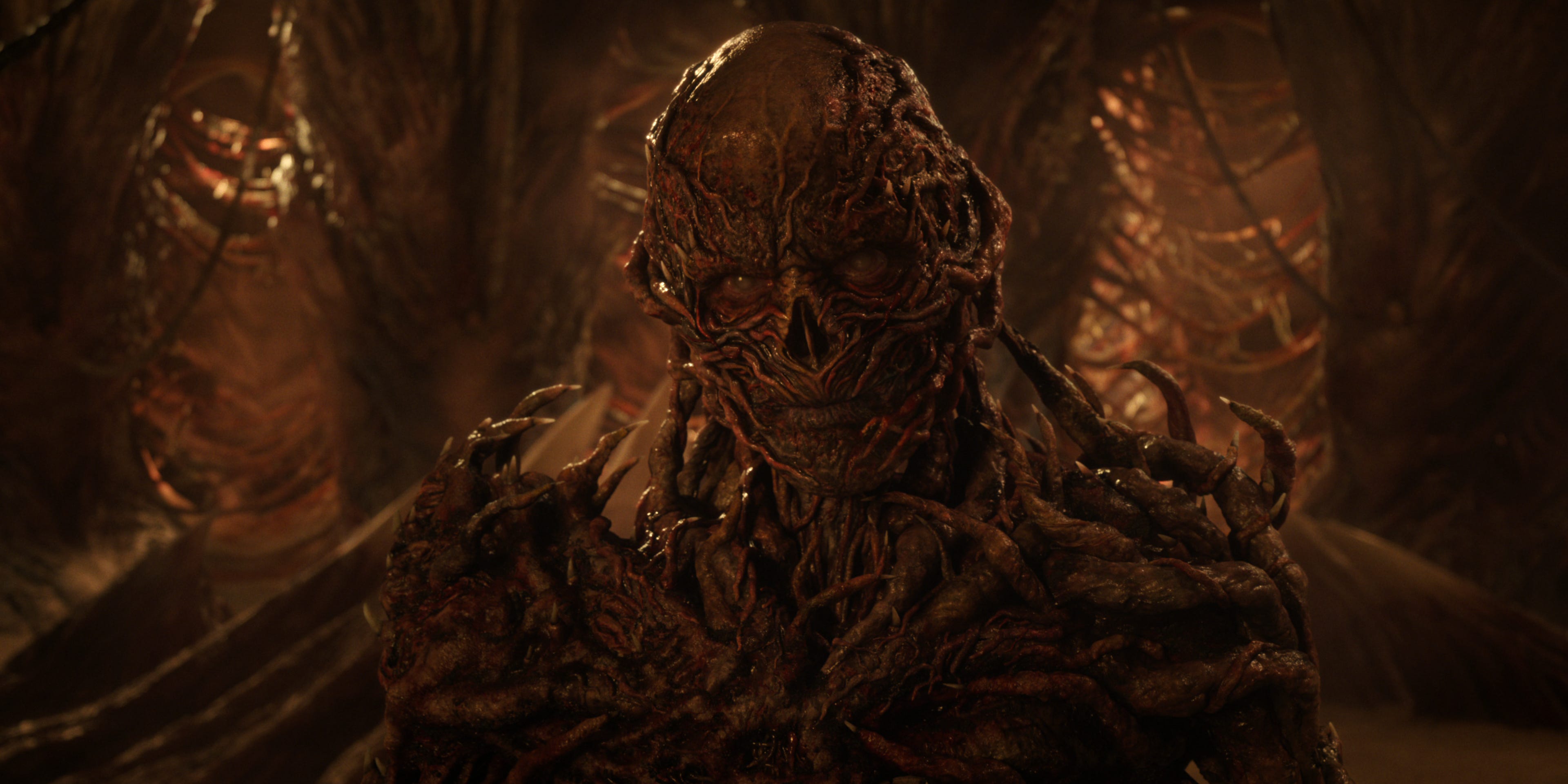
Vecna wasn’t an impulse villain. Matt said the idea was there from the start. “We always wanted to introduce this, you know, sentient being into the show,” he explained. “We had that even all the way back in our original pitch to Netflix for season one.”
But the timing mattered. “It felt right to introduce him in season four,” Matt said, because their characters had moved into high school. Then he went straight into personal territory. “High school for us was, I would say, the worst four years of my life,” he said, laughing — and then staying on it. “I think it’s just a hard time in your life. It’s not necessarily school, but everyone’s trying to figure out who they are. There’s more pressure than ever before. It feels like your entire life is on the line.”
He connected that to the internal nature of anxiety. “It’s all mostly internal, right? I mean, you’re dealing with this. We weren’t vocalizing it to anyone.” That’s where Vecna’s power comes from. “He’s preying on all those sort of dark feelings that you have.”
Matt traced the emotional escape route too. “The only way for Max to climb out of that is with the help of her friends,” he said, then added, “and I suppose Kate Bush as well was helpful in that situation.”
Vecna was also built from the villains who scared them most — specifically the ones who still felt human. “The ones particularly who scared us the most… they were all humanoid,” Matt said. “It was Pinhead. It was Freddy Krueger. And it was Pennywise.” Then he went long on the one that got under his skin. “Particularly, Pennywise really messed me up… Tim Curry,” he said. “’Cause we were the age of kids when we saw it. I saw it in fourth grade. Couldn’t sleep for several weeks. Or really a month.”
He remembered the VHS cover like a threat. “Couldn’t look at his cover on the VHS tape,” Matt said. “My mom had to stay… in the bedroom with me until I fell asleep.” Then, with a grin that didn’t fully hide the truth of it, he landed the point: “So the goal was to do that, which was also to scar and traumatize other childrens.”
Ambassadors of the ’80s
Ross described one of the unexpected joys of Stranger Things: watching it send people backwards into the films that raised them. “One of the things that got us first excited to tell this story was that there was a chance here to introduce these films that inspired us that we grew up on to a different generation,” he said.
He used their own gateway drug as an example. “For us, a big movie was Scream,” Ross explained, “because that was one of the first horror movies that we saw.” And that movie didn’t just entertain — it opened a door. “Scream references a lot of other films, whether it’s Halloween or Nightmare on Elm Street,” he said. “And it inspired us to go back and watch all these classic horror films, and we went through a full horror movie phase.”
That’s what he loves hearing from younger viewers now. “When I hear that watching Stranger Things has inspired younger kids to go back and watch some of these films… whether it’s John Carpenter or an earlier Spielberg or Wes Craven… that fills us with joy,” Ross said. “Or read Stephen King. It makes us so happy.”
Matt couldn’t help himself: “It is depressing when they refer to them as ‘old films’ though.”
Dungeons & Dragons
The show’s relationship with Dungeons & Dragons also opens a window into the Duffers’ own upbringing: “Ross and I were ’90s kids. Didn’t grow up in the ’80s. We just grew up consuming a lot of ’80s pop culture.”
And when he talked about what their era looked like, he went somewhere else. “The game that was actually huge at the time was Magic: The Gathering,” Matt said. “The first movie we ever made was an adaptation of Magic: The Gathering.” They did play D&D, though: “We did play Dungeons & Dragons, but not as much,” he said. “I think if this show were set in the ’90s, they would’ve been playing Magic: The Gathering.”
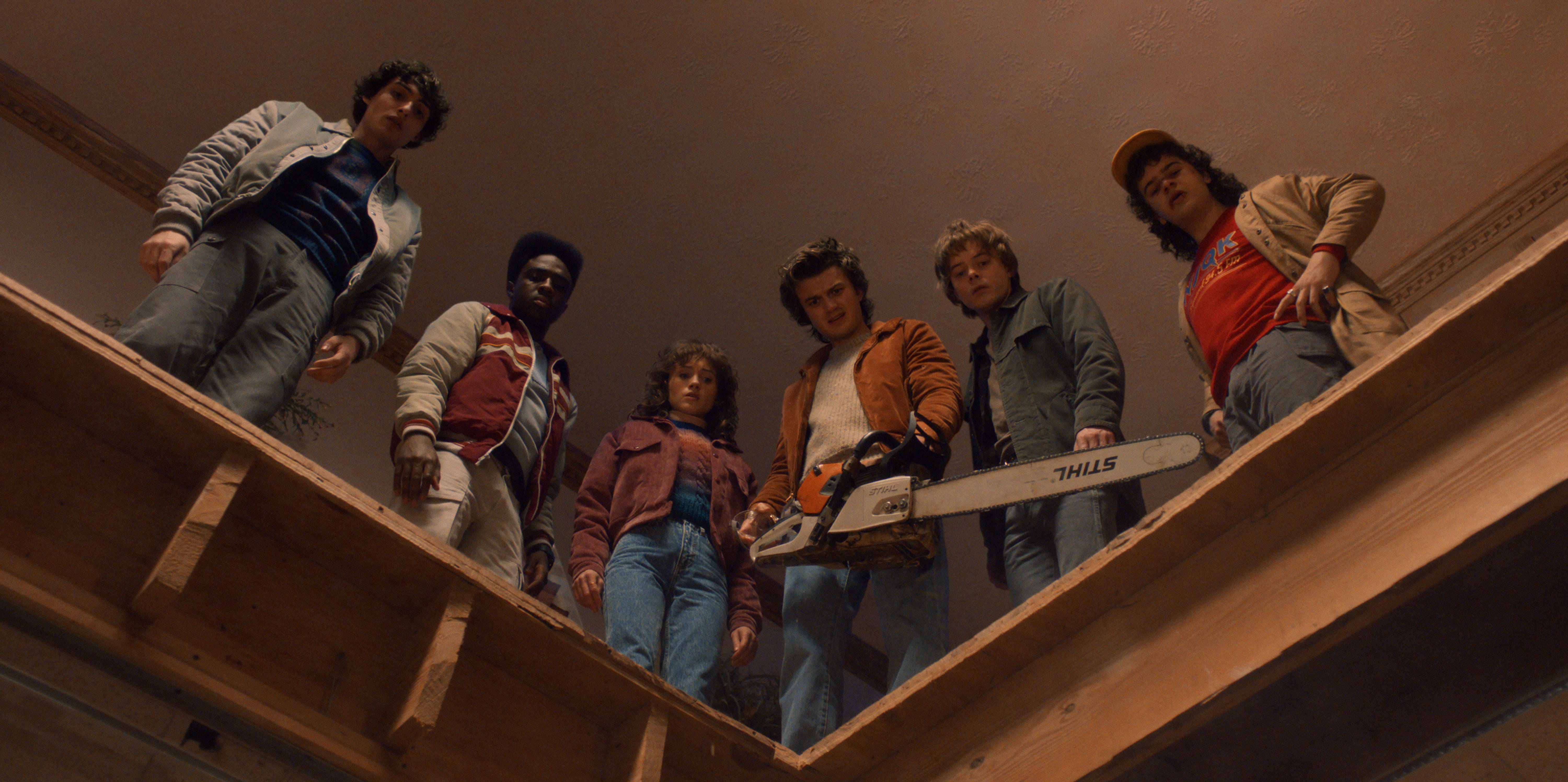
D&D’s role grew organically once it was in the show. “We actually didn’t intend for Dungeons & Dragons to be that big of a part of the show,” Matt admitted. “But the opening scene, we had the kids playing Dungeons & Dragons. And we always wanted to do that.”
Then the story started needing a shared language. “As the show continued, we needed something for the kids to be able to reference in order to help them understand what was going on,” Matt said. “And they had the D&D board out. So we ended up sort of writing that in very organically.”
What mattered most to him wasn’t the nostalgia — it was what the game represents. “It lends itself beautifully… because that’s a game about not just imagination, but collaboration,” he said. “It’s a show about how you can only win by working together, by cooperating, by using your various skills.”
“I’m very proud of the fact that it’s helped encourage some people to find that game,” Matt said. “Because I think especially now where people don’t tend to come together, there’s something very powerful and important about friends getting together in the real world and interacting — not just with physical objects, but with each other.”
Family and Loss
Ross brought the conversation back to what he sees as the true spine of the series. “At its heart, this really is a show about family,” he said. He described Stranger Things as multigenerational by design — not as a side effect. “From early on, we saw this as a multigenerational show,” Ross said.
The long runtime changed what they could do. “If this was a film, it woulda just been about the kids or just been about Hopper,” he said. Instead, they could move across the whole town. “We can bounce around, get to know all these people, but also we can then put them together.”
He singled out Hopper and Eleven as one of the most important emotional journeys to resolve. “Hopper and Eleven probably being the most important just because they’ve had a long journey,” Ross said. Then he laid out the tragedy at its foundation. “Eleven, her mom was taken from her. She didn’t have anyone. Her one father figure, Papa, was really messed up.” What she found in Hopper was a different kind of bond. “And so she found someone in Hopper who had lost a daughter.”
Ross kept it focused on where it ends. “I think we’ve seen that relationship change and evolve over the years,” he said. “And how it plays out is really important for both of their characters in the final season.”
Someone New
The Duffers are careful about adding new characters at the best of times — and a final season is the worst time to throw off the chemistry. Matt said they almost avoided it. “For a while, we were planning not to do it at all,” he said.
But they wanted the last season to feel like a loop closing. “One of the things we wanted to do with the final season was recapture some of the feeling of the first season, so that it would feel like everything is going full-circle,” Matt explained. The problem was obvious. “Because the kids in the show are clearly not kids anymore,” he said.
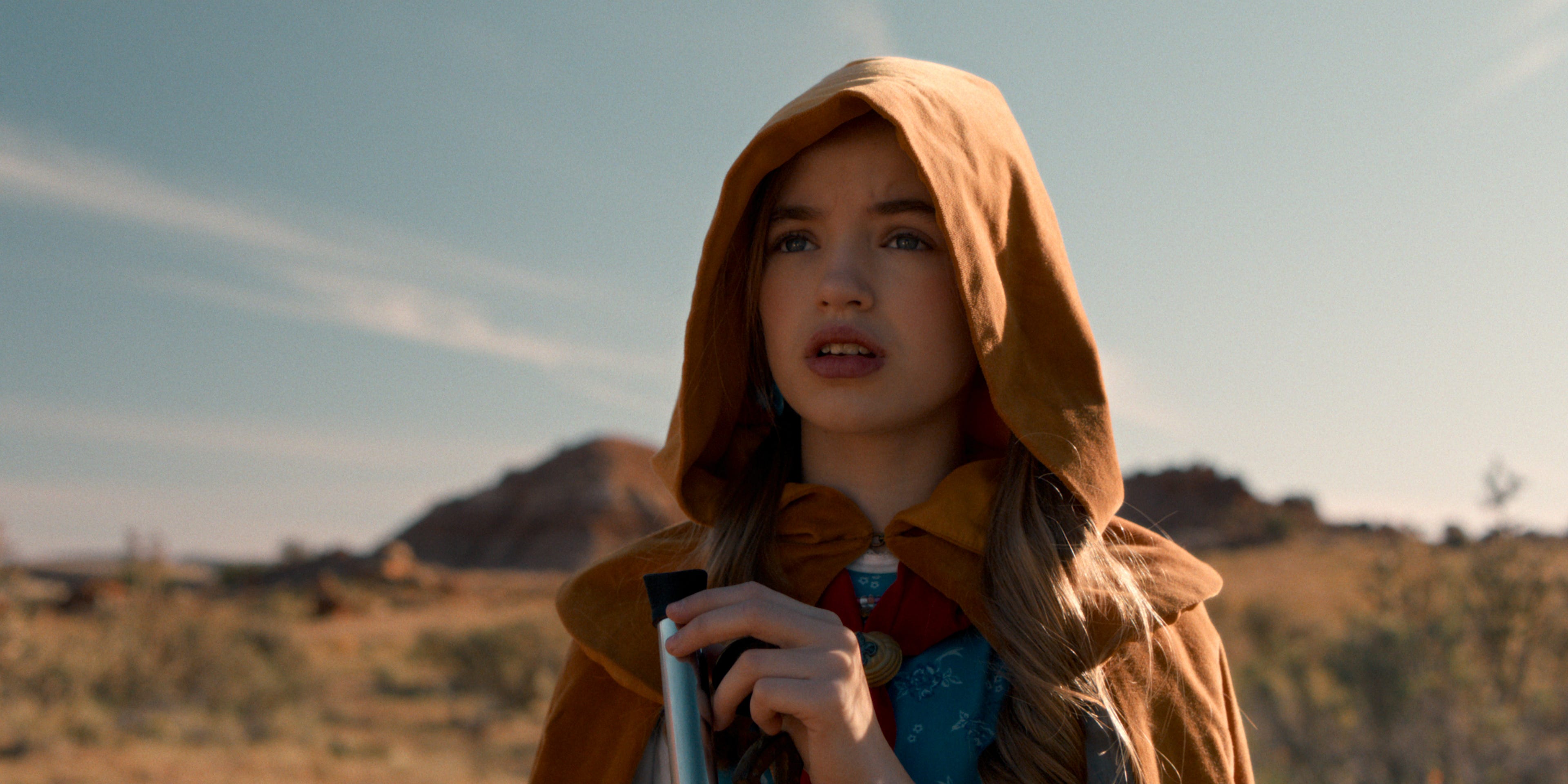
So they solved it by putting actual kids back into the mix. “The only way to really recapture some of the energy and innocence of the first season was to introduce a new, younger cast into the show,” Matt said. That’s where Holly Wheeler comes in. “That’s when we came up with the idea of elevating Holly to a major character,” he said. “Which made sense, because she’s another Wheeler. She’s really just been in the background.”
Casting that role made them nervous. “There are not that many kids that can carry a role of that size,” Matt said, “and that have the kind of range that we knew Holly would need.” The resemblance mattered too. “Extra challenge — she had to look like our Holly would look… like she was a Wheeler family member.”
“We were very lucky in finding Nell,” Matt said, “who we think is a very special kid and extraordinary actor.”
Sound, Score, and Finale
Ross went first on the music, and he still sounded amused that Netflix ever let them do it. “Kyle and Michael… prior to season one, they had never composed a score for anything,” he said. “So I’m shocked Netflix honestly let us hire them.” The result became foundational. “Their sound is so essential to the DNA of the show,” Ross said.
He talked about what the final season gets to do, after four years of musical language building. “We’ve now had four seasons’ worth of score from them,” Ross said. “There are so many themes… and there’s so much about this season that is about coming full-circle.” That meant revisiting earlier material. “We’re revisiting a lot of cues and scores and themes,” he said. “We’re adjusting them for the season, but also we’re trying to bring back those sounds… that went throughout the previous seasons.”
Matt widened it to sound design itself. “Super-important to us,” he said. “If you look at any of our scripts, our cast makes fun of us ’cause every other line is ‘whoosh,’ ‘bang,’ ‘crack.’ It reads like a comic book or something.” It’s not decoration — it’s visualization. “I don’t know, it helps us visualize what the show is going to be, and ultimately sound like,” Matt said.
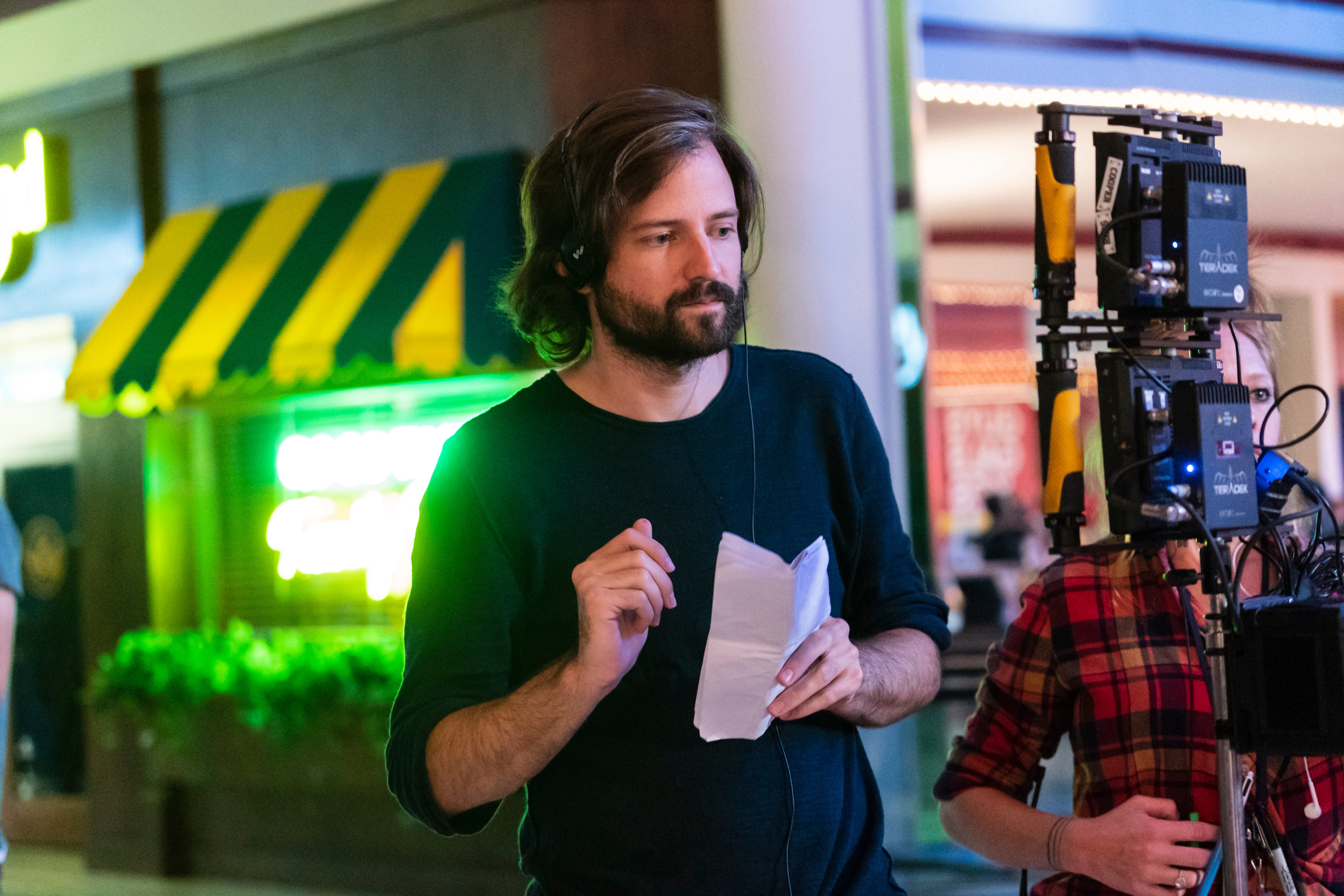
“We spend a lot of time, even on the rough cuts, making sure that it sounds great, even before we send it to Netflix,” Matt explained. “It’s very important to us.” Then he claimed, only half-joking: “I think it’s the best-sounding first rough cuts they will ever get, because we obsess over it.”
He told a story from the premiere that turned into a mini-lecture. Someone praised the sound — and then admitted how they watched it. “Well, how have you been watching the show?” Matt said he asked. “Did you have a sound bar? No, just listening out of their LG TV.” His reaction was immediate. “I said that’s not acceptable.” Then the practical advice: “Headphones are fine. AirPod Maxes sound good. The new AirPods are really good. Or you need a sound bar.” He added, grinning: “If not, I’m gonna be upset.”
The Sweet Spot
Ross summed up their writing philosophy in a way that sounds simple until you realize how hard it is to do consistently. “We love action and horror and spectacle,” he said, “but for us… we get bored personally if we don’t care about the characters.” He pointed to the example they always circle back to. “Someone like a Spielberg, or Jurassic Park being one of the prime examples — you care about these people, and then you bring in the spectacle.”
So that’s where they start. “When we’re talking about sequences… we’re usually building it from the character,” Ross said. “Where do we want our characters to be?” If the emotional climax and the effects climax hit together, that’s the goal. “If you can hit both the character emotional climax at the same time as you’re hitting a visual effects or spectacle climax… that’s our sweet spot,” he said.
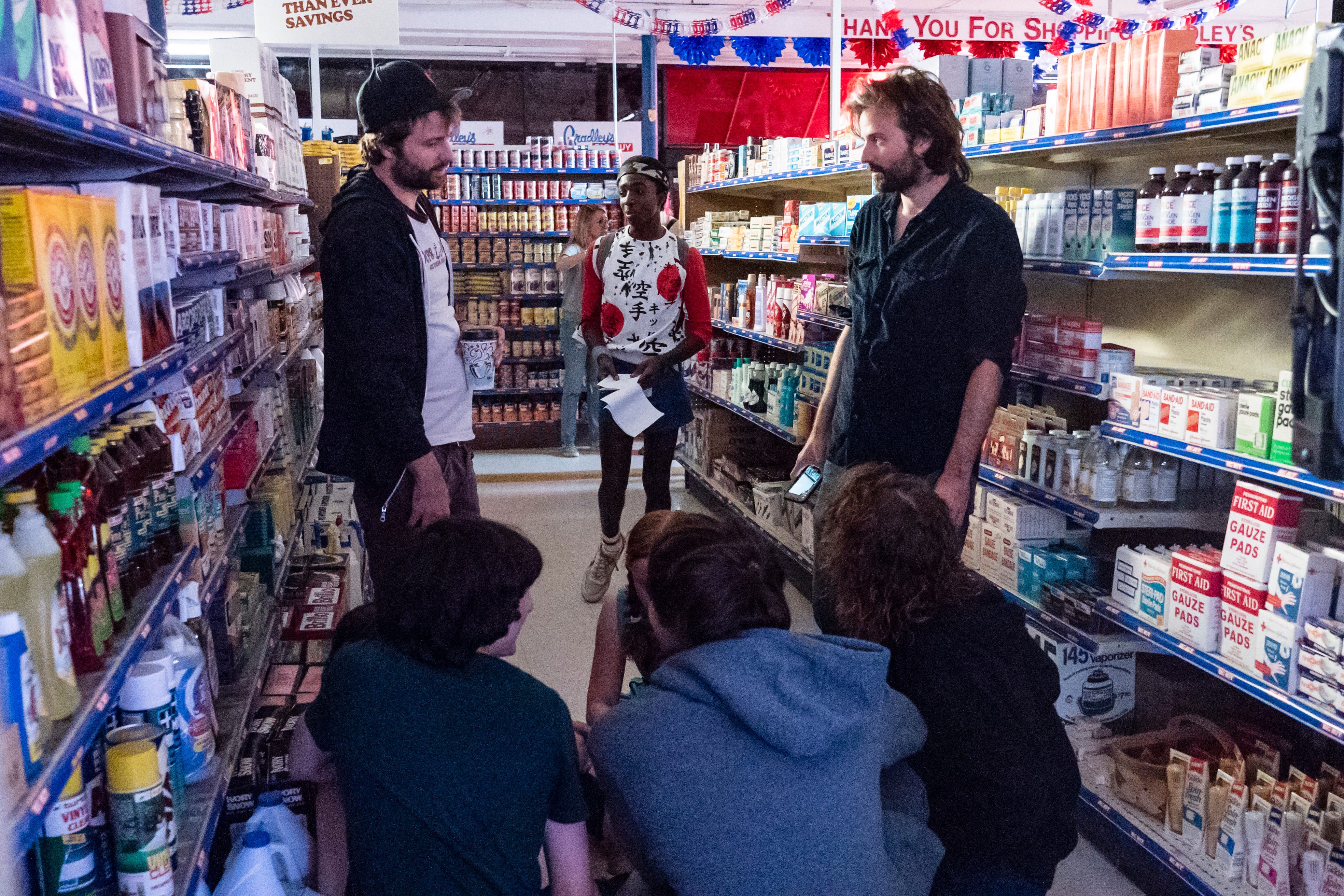
He gave an example the audience already knows. “With Dear Billy, with Max’s escape… it’s both a huge emotional moment… but it’s also big visual effects sequence… and a monster trying to dig into her brain.” Then he stated the rule in its bluntest form. “If you don’t care about these people, then none of them matter.”
Matt agreed, adding the one-line version of the same philosophy. “You don’t want spectacle for the sake of spectacle,” he said. Then, because he can’t help himself: “But we do like monsters.”
Expectation and Vision
Matt talked about the pressure of success as “noise,” and it’s clear they’ve had to build defenses against it. “Every year it feels like there’s more and more noise around it,” he said. The strategy is to keep the circle small. “What we try to do as much as possible is shut off the noise and not listen to it,” he explained.
Then he described how small the decision-making group actually is. “At the end of the day, it comes down to me, Ross, and our four writers,” Matt said, “all of whom have been on the show since either season one or season two.” Their job is to make something they believe in. “We just try to write something that we think is cool,” he said.
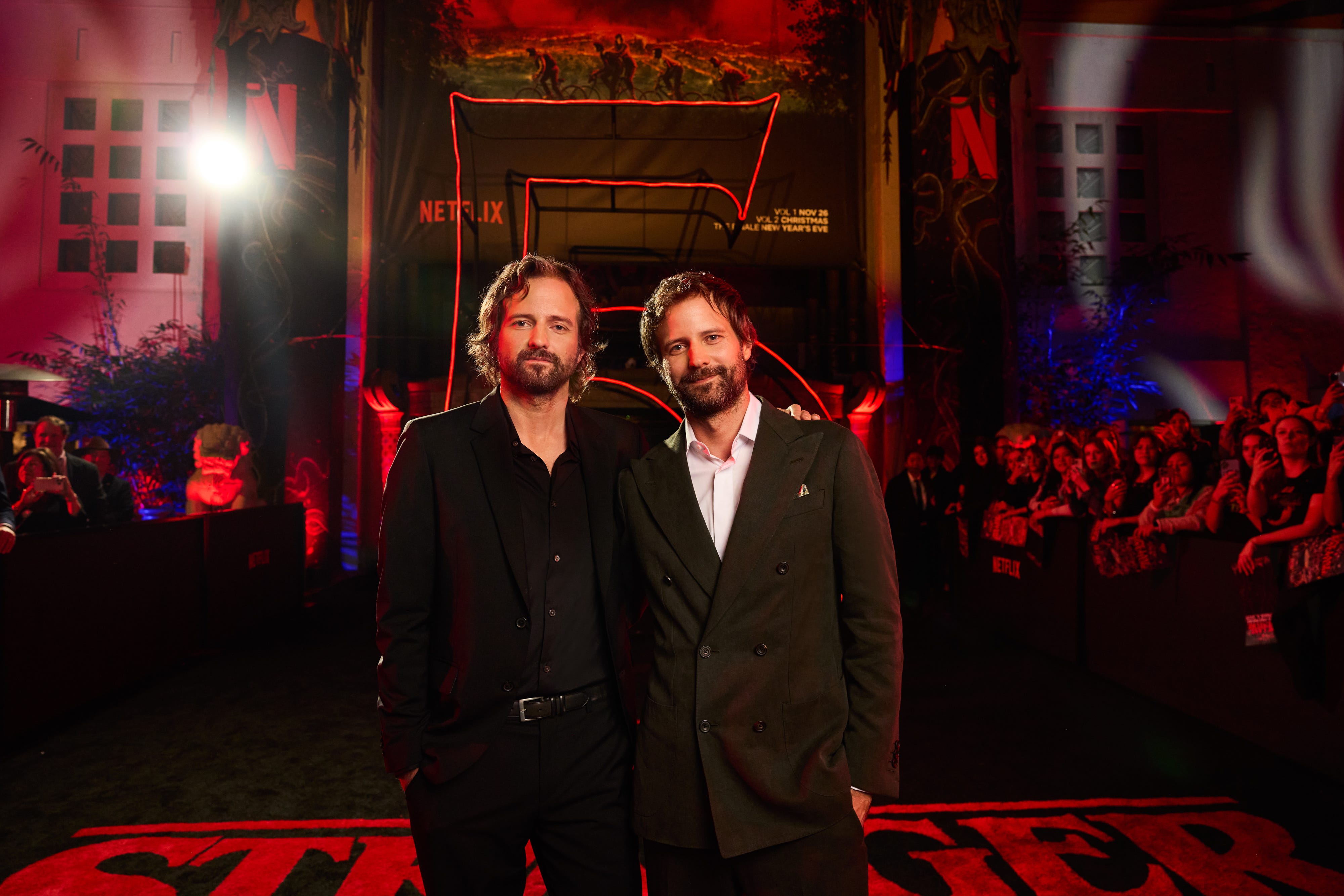
He traced it back to the only season that had no pressure. “That’s what we did all the way back in season one, because we had no fans,” Matt said. “We were just trying to make something that we loved.” With the finale, the danger is paralysis. “Especially with this final season… because of the level of expectation… it can just paralyze you,” he said. “So we just stopped thinking about it.”
The method is almost comically narrow. “Really, you’re just trying to please five people, and then hoping it trickles outward,” Matt said.
Netflix adds another complication: “There is no test screenings,” he said. “So we don’t get any reactions from fans.” The feedback loop is tiny. “We’re only getting feedback from… a total of 10 people,” Matt said. “Which is terrifying, but on the other hand, really freeing.” Then the leap of faith: “You put it out in the world and you pray.”
Farewell… and an Encore?
Ross described the final stretch of the shoot as emotionally brutal — not because they were trying to manufacture goodbye moments, but because the schedule forced them. “The shoot was so hard and so long that all of us… were really just focused on the work for the majority of the shoot,” he said. But once they started final scenes, it changed.
They organized it so the ending landed one actor at a time. “We organized it in a way that every actor’s last scene in the show was the last scene we filmed,” Ross said. “And so every time we were on an actor’s last scene, it was really emotional all day for everyone. There were lots of tears.”
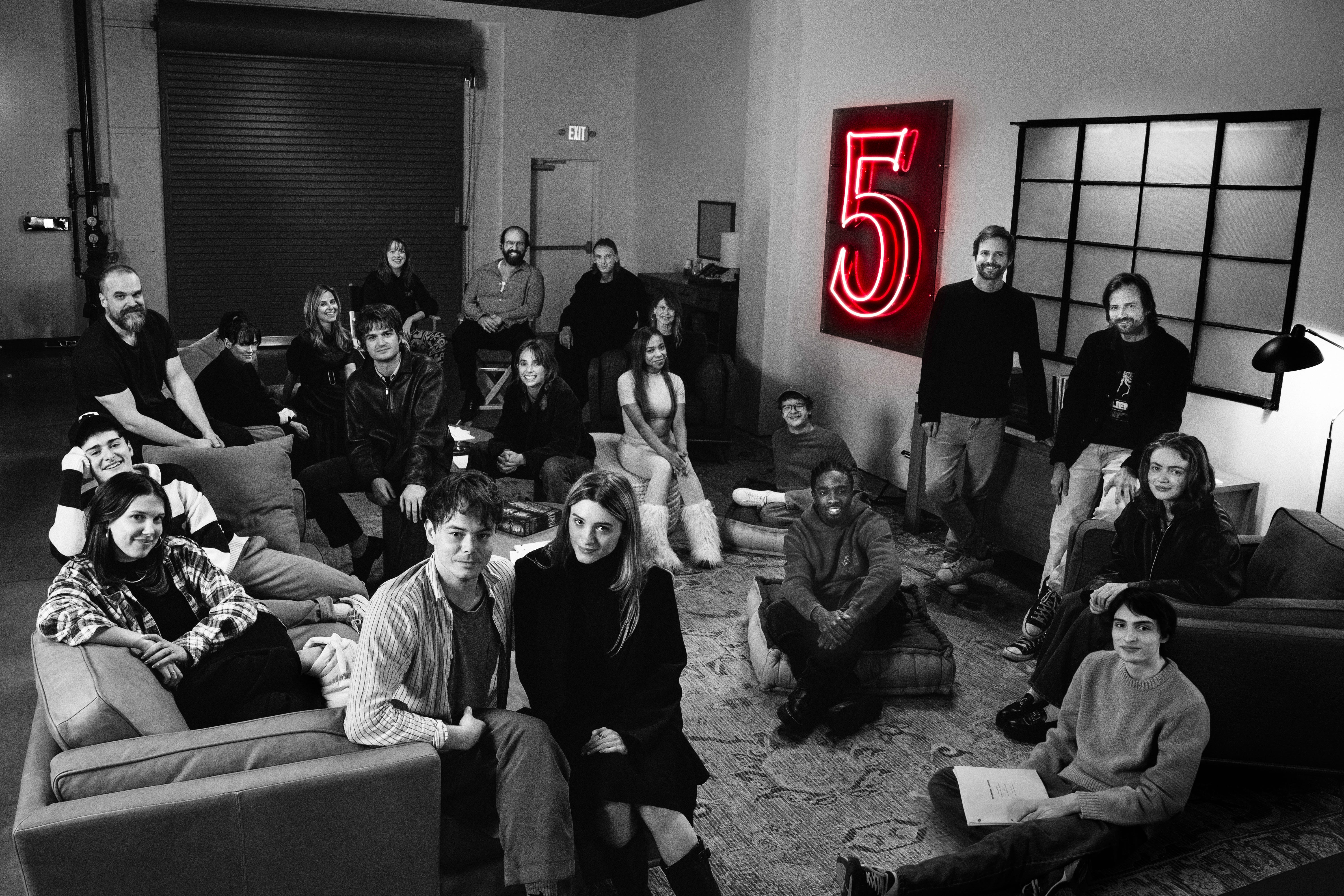
For the brothers, the end was the hardest part — because it wasn’t just the cast. “We knew not only we’re gonna be wrapping a group of actors that we really cared about and loved,” Ross said, “but also we were saying goodbye to this show, to the production, to the crew.” And even if they work together again someday, it won’t feel the same. “Not in the same way, not all together,” he said.
They did what they could to mark it. “There was some confetti at the end. There was some champagne,” Ross said. “Everyone kinda got a key prop.” Then the specifics started coming out: “Joe got his bat.” Matt jumped in: “Sadie got her Walkman. Millie got the dress. The pink dress that she was wearing in season one.”
As for the future beyond Hawkins, Ross said they’ve started talking — carefully. “We are in early, early days of talking,” he said. “We have this spinoff idea… a live-action spinoff. It would be another TV series, though.”
Matt drew a firm line around the main story. “It is the end of the story of these characters and Hawkins and the Upside Down,” he said. He mentioned the animated project as the exception — because animation freezes time. “There is a cartoon… set between season two and three,” Matt said. “And the kids in that cartoon will never age, which is great.” Then he delivered the joke that also felt like a promise. “Other than that, this is the end of their journey. And we don’t want to explore anything beyond that. Unless we’re all destitute in like 20 years.” Ross immediately followed: “And then this interview never happened.”
Full Circle
What stands out isn’t how carefully the Duffers guard spoilers — it’s how clearly they still know what Stranger Things is about. Collaboration. Friendship. Family. Fear as something internal. Monsters as something external. A town that feels small enough to be real, and a world big enough to swallow it.
They keep coming back to the same balance Ross described: if the emotional peak and the spectacle peak hit at the same moment, the story lands. If it doesn’t, it’s just noise.
Now the Upside Down gets its answers. The characters get their ending. And the Duffers, after a decade of building, get to close the loop.
Stranger Things 5: David Harbour, Millie Bobby Brown, Noah Schnapp and Shawn Levy

Stranger Things has always been a show about growing up, even when monsters and alternate dimensions stole the spotlight. When it premiered in 2016, it felt like a lightning bolt—an 80s throwback that wasn’t just referencing nostalgia, but livi…
Stranger Things 5: Caleb McLaughlin, Gaten Matarazzo, Finn Wolfhard, and Jamie Campbell Bower

Stranger Things has always been a story about growing up, but for this group of actors, it’s also been the backdrop of their own lives. Across a decade, they’ve moved from childhood into adulthood i…